Datasheet4U Logo Datasheet4U.com

MBR30L45FCT - Schottky Rectifier

Download the MBR30L45FCT datasheet PDF. This datasheet also covers the MBR30L45CT variant, as both devices belong to the same schottky rectifier family and are provided as variant models within a single manufacturer datasheet.

Key Features

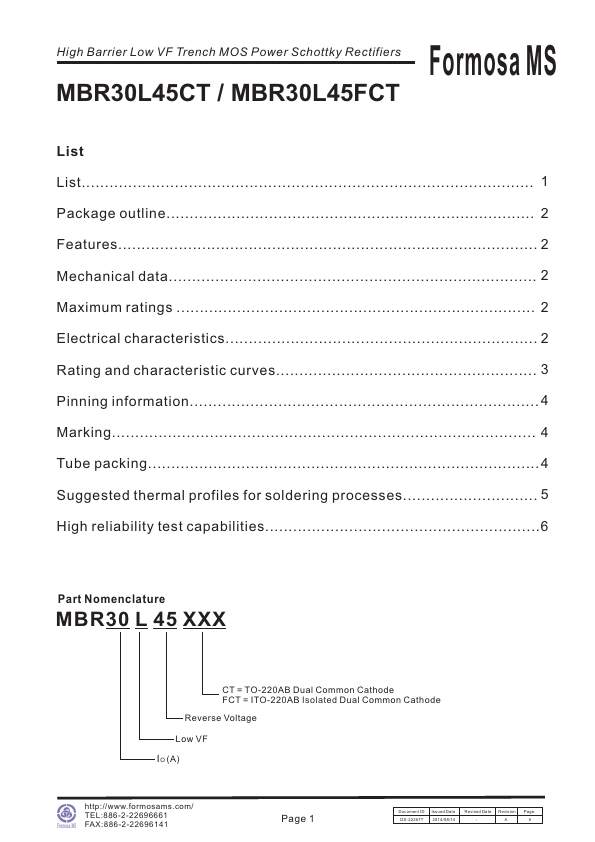
  • 2 Mechanical data 2 Maximum ratings 2 Electrical characteristics 2 Rating and characteristic curves 3 Pinning information4 Marking 4 Tube packing 4 Suggested thermal profiles for soldering processes 5 High reliability test capabilities6 Part Nomenclature MBR30 L 45 XXX CT = TO-220AB Dual Common Cathode FCT = ITO-220AB Isolated Dual Common Cathode Reverse Voltage Low VF IO (A) http://www. formosams. com/ TEL:886-2-22696661 FAX:886-2-22696141 Page 1 Document ID Issued Date DS-22267T 2014/08/14.

📥 Download Datasheet

Note: The manufacturer provides a single datasheet file (MBR30L45CT-FormosaMS.pdf) that lists specifications for multiple related part numbers.

Datasheet Details

Part number MBR30L45FCT
Manufacturer Formosa MS
File Size 54.58 KB
Description Schottky Rectifier
Datasheet download datasheet MBR30L45FCT Datasheet

Full PDF Text Transcription (Reference)

The following content is an automatically extracted verbatim text from the original manufacturer datasheet and is provided for reference purposes only.

View original datasheet text
High Barrier Low VF Trench MOS Power Schottky Rectifiers MBR30L45CT / MBR30L45FCT Formosa MS List List................................................................................................. 1 Package outline............................................................................... 2 Features.......................................................................................... 2 Mechanical data............................................................................... 2 Maximum ratings ............................................................................. 2 Electrical characteristics................................................................... 2 Rating and characteristic curves........................................................