
Datasheet4U Logo Datasheet4U.com

GS8051N - 250MHZ CMOS Rail-to-Rail Output Opamps

This page provides the datasheet information for the GS8051N, a member of the GS8051 250MHZ CMOS Rail-to-Rail Output Opamps family.

Datasheet Summary

Description

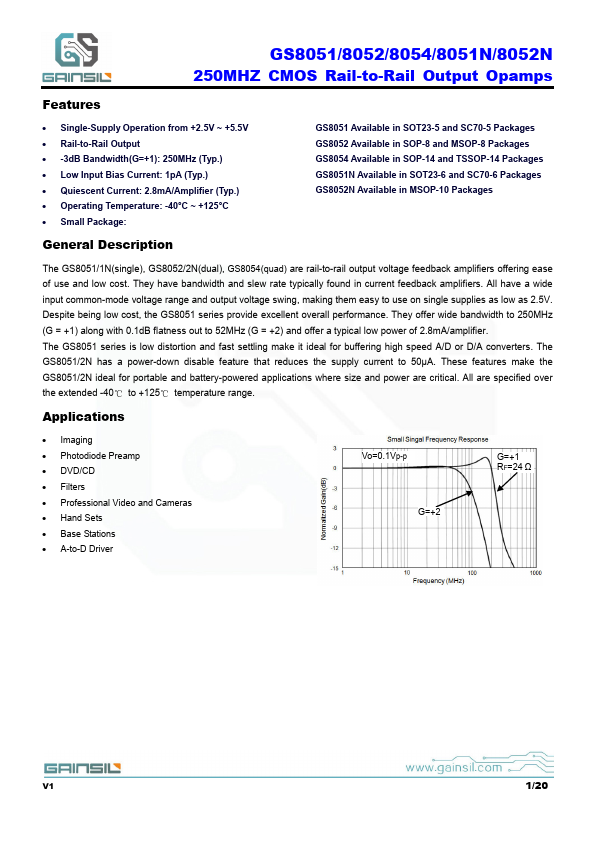
The GS8051/1N(single), GS8052/2N(dual), GS8054(quad) are rail-to-rail output voltage feedback amplifiers offering ease of use and low cost.

They have bandwidth and slew rate typically found in current feedback amplifiers.

Features

  • Single-Supply Operation from +2.5V ~ +5.5V.
  • Rail-to-Rail Output.
  • -3dB Bandwidth(G=+1): 250MHz (Typ. ).
  • Low Input Bias Current: 1pA (Typ. ).
  • Quiescent Current: 2.8mA/Amplifier (Typ. ).
  • Operating Temperature: -40°C ~ +125°C.
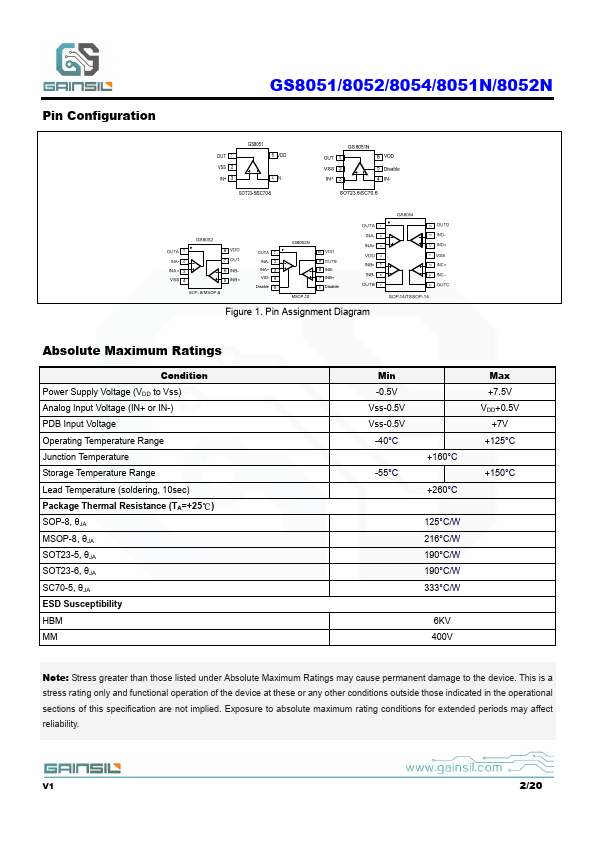
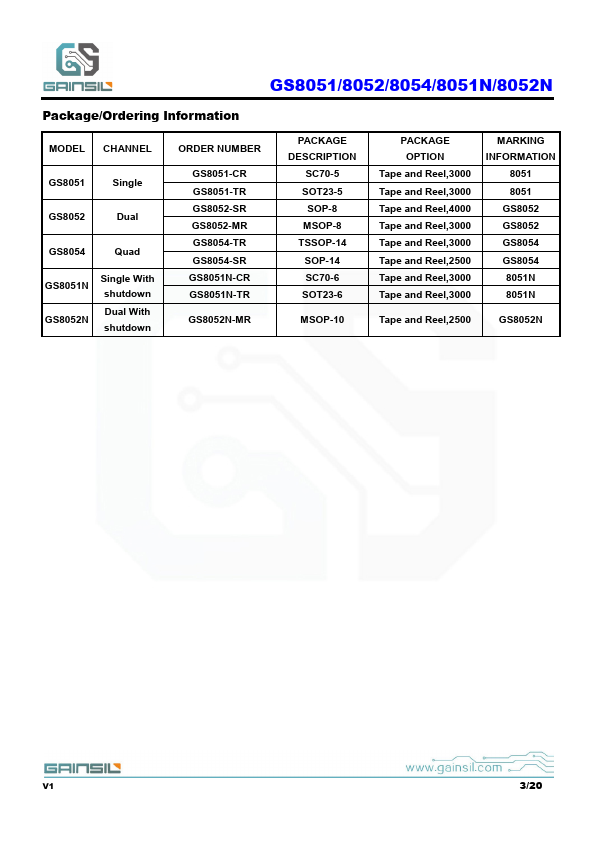
  • Small Package: GS8051 Available in SOT23-5 and SC70-5 Packages GS8052 Available in SOP-8 and MSOP-8 Packages GS8054 Available in SOP-14 and TSSOP-14 Packages GS8051N Available in SOT23-6 and SC70-6 Packages GS8052N.

📥 Download Datasheet

Datasheet preview – GS8051N

Datasheet Details

Part number GS8051N
Manufacturer GAINSIL
File Size 1.00 MB
Description 250MHZ CMOS Rail-to-Rail Output Opamps
Datasheet download datasheet GS8051N Datasheet
Additional preview pages of the GS8051N datasheet.
Other Datasheets by GAINSIL

Full PDF Text Transcription

Click to expand full text
GS8051/8052/8054/8051N/8052N 250MHZ CMOS Rail-to-Rail Output Opamps Features • Single-Supply Operation from +2.5V ~ +5.5V • Rail-to-Rail Output • -3dB Bandwidth(G=+1): 250MHz (Typ.) • Low Input Bias Current: 1pA (Typ.) • Quiescent Current: 2.8mA/Amplifier (Typ.) • Operating Temperature: -40°C ~ +125°C • Small Package: GS8051 Available in SOT23-5 and SC70-5 Packages GS8052 Available in SOP-8 and MSOP-8 Packages GS8054 Available in SOP-14 and TSSOP-14 Packages GS8051N Available in SOT23-6 and SC70-6 Packages GS8052N Available in MSOP-10 Packages General Description The GS8051/1N(single), GS8052/2N(dual), GS8054(quad) are rail-to-rail output voltage feedback amplifiers offering ease of use and low cost. They have bandwidth and slew rate typically found in current feedback amplifiers.
Published: |