Datasheet4U Logo Datasheet4U.com

ICS1722 - 16 Pin Quicksaver Charge Controller For Ni-cd & Ni-mh Batteries

Description

The ICS1722 is a CMOS device designed for the intelligent charge control of either nickel-cadmium (NiCd) or nickel-metal hydride (NiMH) batteries.

The controller uses a pulsed-current charging technique together with voltage slope termination.

Features

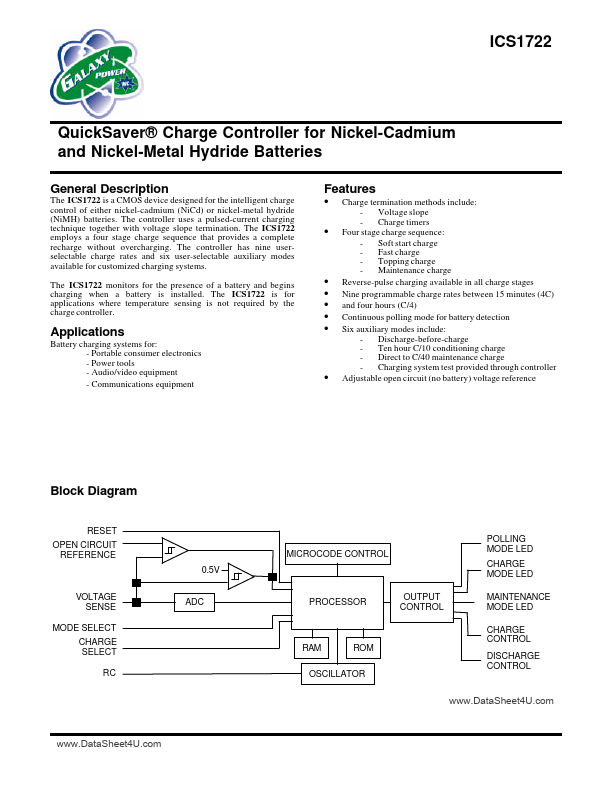
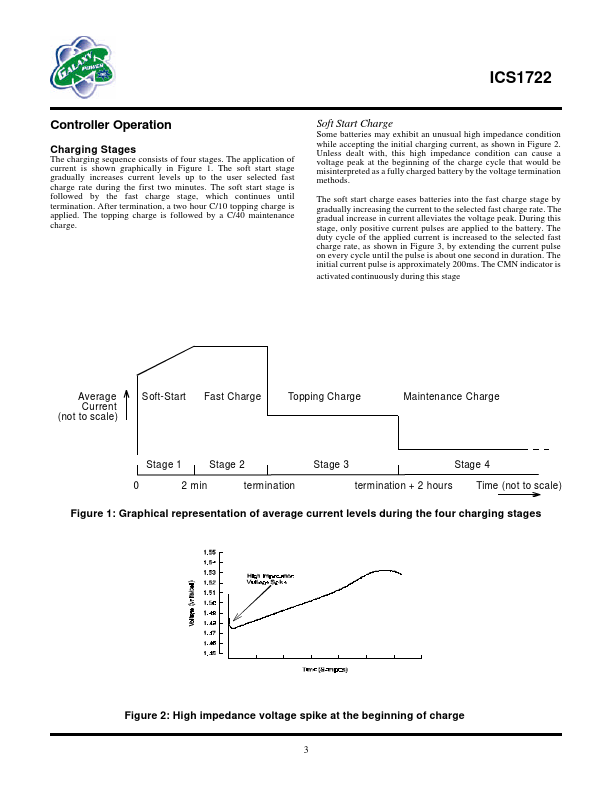
  • Charge termination methods include: Voltage slope Charge timers Four stage charge sequence: Soft start charge Fast charge Topping charge Maintenance charge Reverse-pulse charging available in all charge stages Nine programmable charge rates between 15 minutes (4C) and four hours (C/4) Continuous polling mode for battery detection Six auxiliary modes include: Discharge-before-charge Ten hour C/10 conditioning charge Direct to C/40 maintenance charge Charging system test provid.

📥 Download Datasheet

Datasheet Details

Part number ICS1722
Manufacturer Galaxy Power
File Size 155.95 KB
Description 16 Pin Quicksaver Charge Controller For Ni-cd & Ni-mh Batteries
Datasheet download datasheet ICS1722 Datasheet

Full PDF Text Transcription (Reference)

The following content is an automatically extracted verbatim text from the original manufacturer datasheet and is provided for reference purposes only.

View original datasheet text
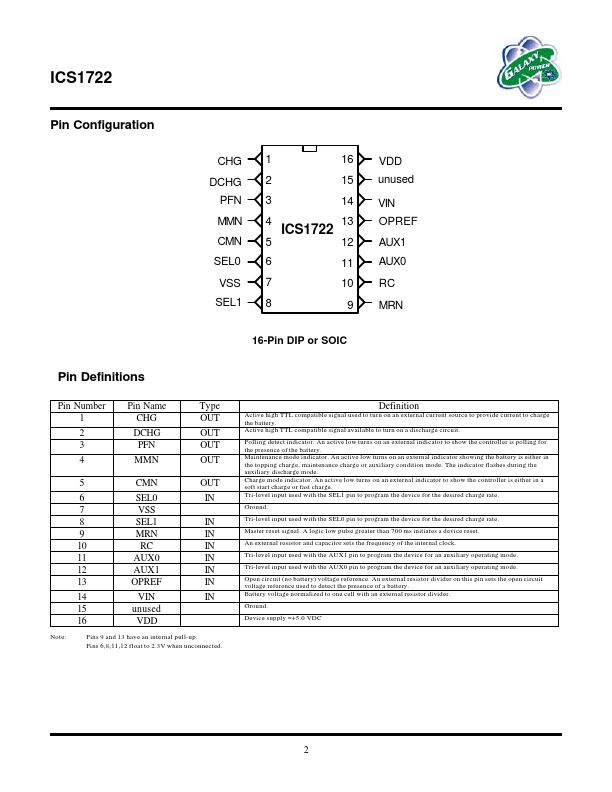
ICS1722 QuickSaver® Charge Controller for Nickel-Cadmium and Nickel-Metal Hydride Batteries General Description The ICS1722 is a CMOS device designed for the intelligent charge control of either nickel-cadmium (NiCd) or nickel-metal hydride (NiMH) batteries. The controller uses a pulsed-current charging technique together with voltage slope termination. The ICS1722 employs a four stage charge sequence that provides a complete recharge without overcharging. The controller has nine userselectable charge rates and six user-selectable auxiliary modes available for customized charging systems. The ICS1722 monitors for the presence of a battery and begins charging when a battery is installed. The ICS1722 is for applications where temperature sensing is not required by the charge controller.
Published: |