

Datasheet4U Logo Datasheet4U.com

ICS94228 - Programmable System Clock Chip

Description

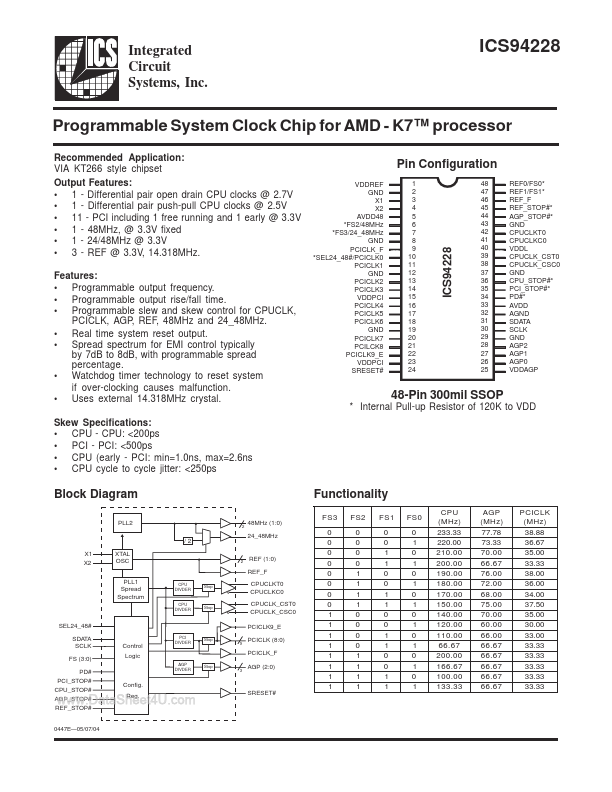
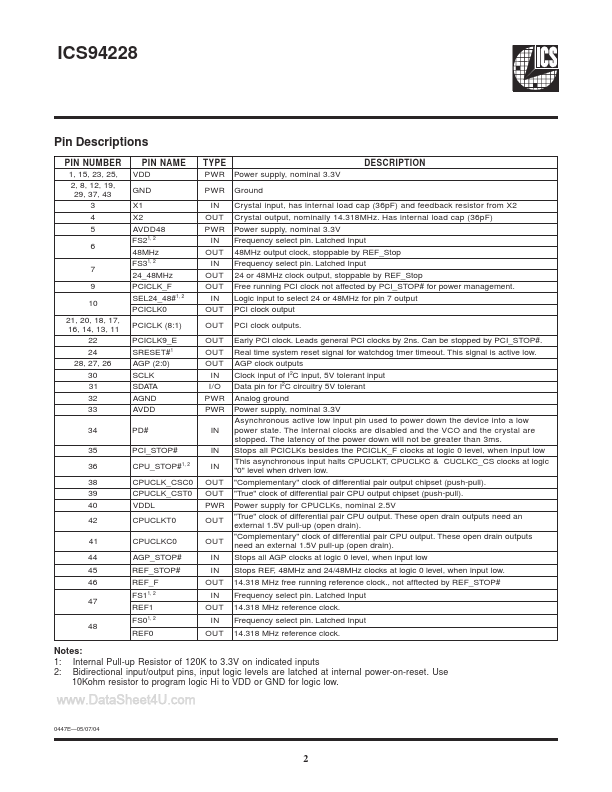
PIN NUMBER 1, 15, 23, 25, 2, 8, 12, 19, 29, 37, 43 3 4 5 6 7 9 10 21, 20, 18, 17, 16, 14, 13, 11 22 24 28, 27, 26 30 31 32 33 34 35 36 38 39 40 42 41 44 45 46 47 48 PIN NAME VDD GND X1 X2 AVDD48 FS21, 2 48MHz FS31, 2 24_48MHz PCICLK_F SEL24_48#1, 2 PCICLK0 PCICLK (8:1) PCICLK9_E SRESET#1 AGP (2:0)

Features

  • 1 - Differential pair open drain CPU clocks @ 2.7V.
  • 1 - Differential pair push-pull CPU clocks @ 2.5V.
  • 11 - PCI including 1 free running and 1 early @ 3.3V.
  • 1 - 48MHz, @ 3.3V fixed.
  • 1 - 24/48MHz @ 3.3V.
  • 3 - REF @ 3.3V, 14.318MHz. Features:.
  • Programmable output frequency.
  • Programmable output rise/fall time.
  • Programmable slew and skew control for CPUCLK, PCICLK, AGP, REF, 48MHz and 24_48MHz.
  • Real time sy.

📥 Download Datasheet

Datasheet Details

Part number ICS94228
Manufacturer Integrated Circuit Systems
File Size 184.19 KB
Description Programmable System Clock Chip
Datasheet download datasheet ICS94228 Datasheet

Full PDF Text Transcription (Reference)

The following content is an automatically extracted verbatim text from the original manufacturer datasheet and is provided for reference purposes only.

View original datasheet text
www.DataSheet4U.com Integrated Circuit Systems, Inc. ICS94228 Programmable System Clock Chip for AMD - K7™ processor Recommended Application: VIA KT266 style chipset Output Features: • 1 - Differential pair open drain CPU clocks @ 2.7V • 1 - Differential pair push-pull CPU clocks @ 2.5V • 11 - PCI including 1 free running and 1 early @ 3.3V • 1 - 48MHz, @ 3.3V fixed • 1 - 24/48MHz @ 3.3V • 3 - REF @ 3.3V, 14.318MHz. Features: • Programmable output frequency. • Programmable output rise/fall time. • Programmable slew and skew control for CPUCLK, PCICLK, AGP, REF, 48MHz and 24_48MHz. • Real time system reset output. • Spread spectrum for EMI control typically by 7dB to 8dB, with programmable spread percentage. • Watchdog timer technology to reset system if over-clocking causes malfunction.
Published: |