Datasheet4U Logo Datasheet4U.com

NTE7098 - Integrated Circuit Current Mode Pulse Width Modulator (PWM) Control Circuit

Datasheet Summary

Description

The NTE7098 and NTE7099 are integrated circuits in 8 Lead DIP type packages that incorporate a new precision temperature

controlled oscillator to minimize variations in frequency.

flop, which blanks the output off every other clock cycle, limits the d

Features

  • include low start.
  • up current, pulse.
  • by.
  • current limiting, and high.
  • current totem pole output for driving capacitive loads, such as the gate of a power MOSFET. The output is low in the off state, consistent with N.
  • channel devices. Features: D Optimized for Off.
  • Line Control D Temperature Compensated Oscillator D 50% Maximum Duty.
  • Cycle Clamp D Vref Stabilized before Output Stage is Enabled D Low Start.
  • Up Current D Pulse.
  • by Pulse.

📥 Download Datasheet

Datasheet preview – NTE7098

Datasheet Details

Part number NTE7098
Manufacturer NTE Electronics
File Size 25.30 KB
Description Integrated Circuit Current Mode Pulse Width Modulator (PWM) Control Circuit
Datasheet download datasheet NTE7098 Datasheet
Additional preview pages of the NTE7098 datasheet.
Other Datasheets by NTE Electronics

Full PDF Text Transcription

Click to expand full text
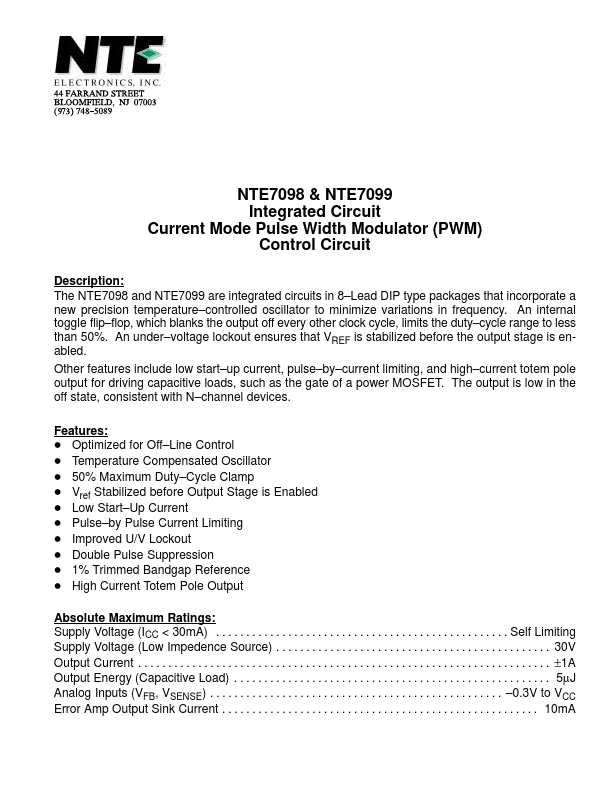
NTE7098 & NTE7099 Integrated Circuit Current Mode Pulse Width Modulator (PWM) Control Circuit Description: The NTE7098 and NTE7099 are integrated circuits in 8–Lead DIP type packages that incorporate a new precision temperature–controlled oscillator to minimize variations in frequency. An internal toggle flip–flop, which blanks the output off every other clock cycle, limits the duty–cycle range to less than 50%. An under–voltage lockout ensures that VREF is stabilized before the output stage is enabled. Other features include low start–up current, pulse–by–current limiting, and high–current totem pole output for driving capacitive loads, such as the gate of a power MOSFET. The output is low in the off state, consistent with N–channel devices.

Published: |