AP1519
AP1519 is PWM Buck DC/DC Converter manufactured by Anachip.
Features
- Adjustable version output voltage range, 0.8V to 18V+4%
- 300KHz +15% fixed switching frequency
- Voltage mode non-synchronous PWM control
- Thermal-shutdown and current-limit protection
- ON/OFF shutdown control input
- Operating voltage can be up to 22V
- Output load current: 2A
- SOP-8L Pb-Free packages
- Low power standby mode
- Built-in switching transistor on chip
- General Description
The AP1519 is monolithic IC designed for a step-down DC/DC converter, and own the ability of driving a 2A load without additional transistor. It saves board space. The external shutdown function can be controlled by logic level and then e into standby mode. The internal pensation makes feedback control having good line and load regulation without external design. Regarding protected function, thermal shutdown is to prevent over temperature operating from damage, and current limit is against over current operating of the output switch. If current limit function occurs and VFB is down below 0.5V, the switching frequency will be reduced. The AP1519 series operates at a switching frequency of 300KHz thus allows smaller sized filter ponents than what would be needed with lower frequency switching regulators. Other features include a guaranteed +4% tolerance on output voltage under specified input voltage and output load conditions, and +15% on the oscillator frequency. The chips are available in a standard 8-lead SOP-8 package.
- Applications
- Simple High-efficiency step-down regulator
- On-card switching regulators
- Positive to negative converter
- Pin Assignments
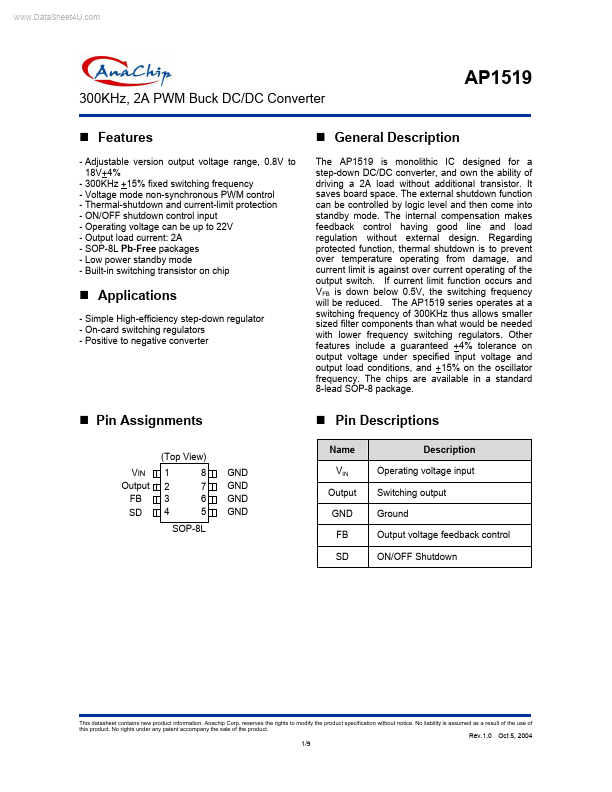
(Top View) VIN Output FB SD 1 2 3 4 8 7 6 5 SOP-8L GND GND GND GND
- Pin Descriptions
Name VIN Output GND FB SD Description
Operating voltage input Switching output Ground Output voltage feedback control ON/OFF Shutdown
This datasheet contains new product information. Anachip Corp. reserves the rights to modify the product specification without notice. No liability is assumed as a result of the use of...