Datasheet4U Logo Datasheet4U.com

MPR121QR2 - Proximity Capacitive Touch Sensor Controller

Download the MPR121QR2 datasheet PDF. This datasheet also covers the MPR121 variant, as both devices belong to the same proximity capacitive touch sensor controller family and are provided as variant models within a single manufacturer datasheet.

General Description

Table 1.

Pin No.

I2C Address Select Input Pin.

Key Features

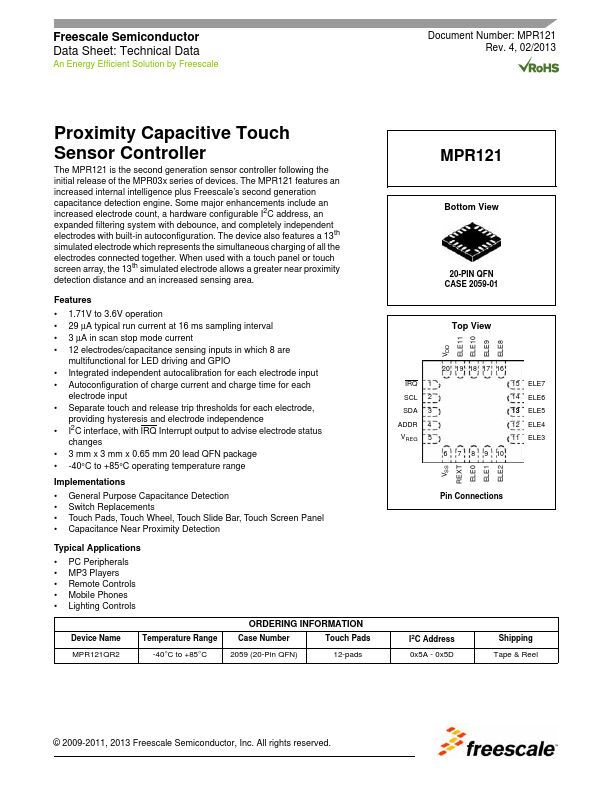
  • an increased internal intelligence plus Freescale’s second generation capacitance detection engine. Some major enhancements include an increased electrode count, a hardware configurable I2C address, an expanded filtering system with debounce, and completely independent electrodes with built-in autoconfiguration. The device also features a 13th simulated electrode which represents the simultaneous charging of all the electrodes connected together. When used with a touch panel or touch screen arra.

📥 Download Datasheet

Note: The manufacturer provides a single datasheet file (MPR121_FreescaleSemiconductor.pdf) that lists specifications for multiple related part numbers.

Full PDF Text Transcription (Reference)

The following content is an automatically extracted verbatim text from the original manufacturer datasheet and is provided for reference purposes only.

View original datasheet text
Freescale Semiconductor Data Sheet: Technical Data An Energy Efficient Solution by Freescale Document Number: MPR121 Rev. 4, 02/2013 Proximity Capacitive Touch Sensor Controller The MPR121 is the second generation sensor controller following the initial release of the MPR03x series of devices. The MPR121 features an increased internal intelligence plus Freescale’s second generation capacitance detection engine. Some major enhancements include an increased electrode count, a hardware configurable I2C address, an expanded filtering system with debounce, and completely independent electrodes with built-in autoconfiguration. The device also features a 13th simulated electrode which represents the simultaneous charging of all the electrodes connected together.