

Datasheet4U Logo Datasheet4U.com

TST02AH00 - Cannon Trident Connector System

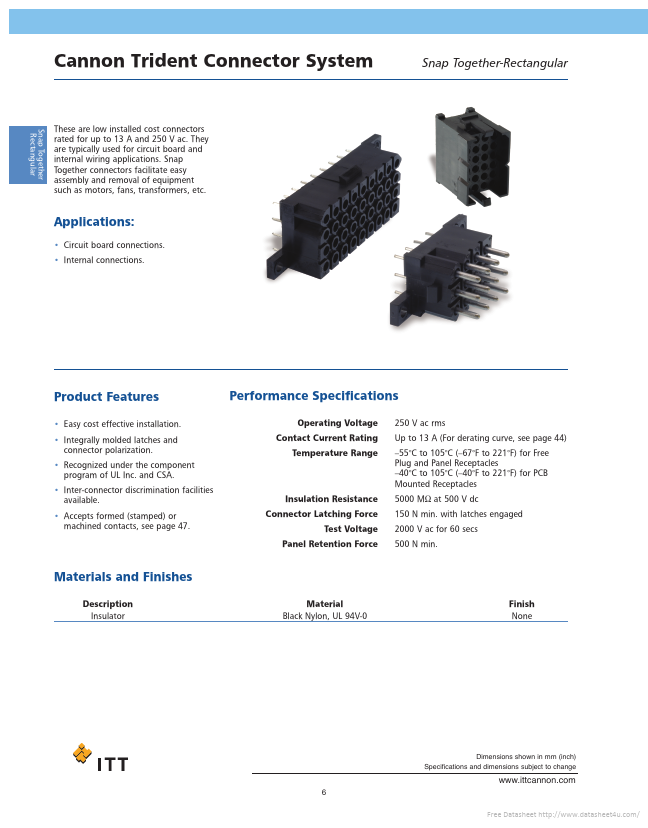
This page provides the datasheet information for the TST02AH00, a member of the TST02PA00 Cannon Trident Connector System family.

Datasheet Summary

Description

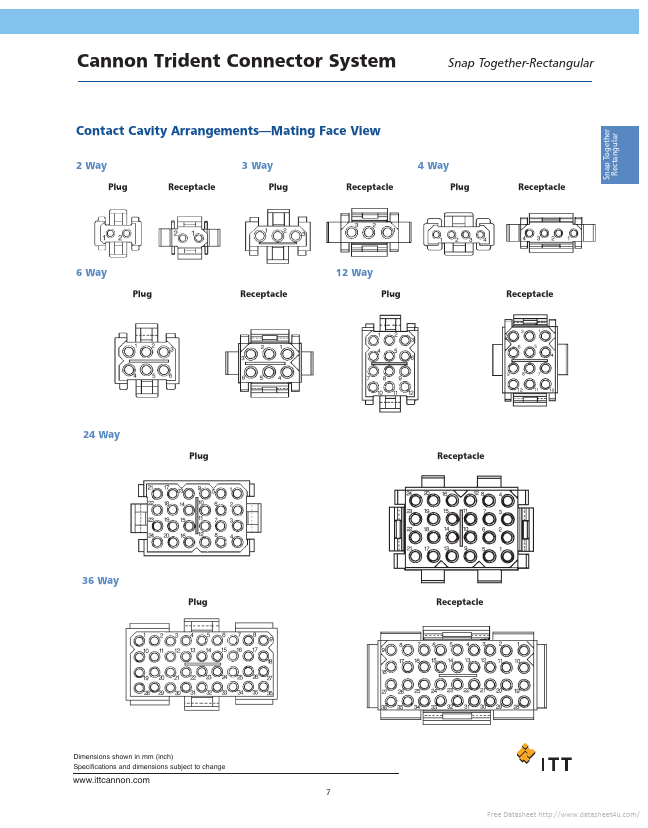
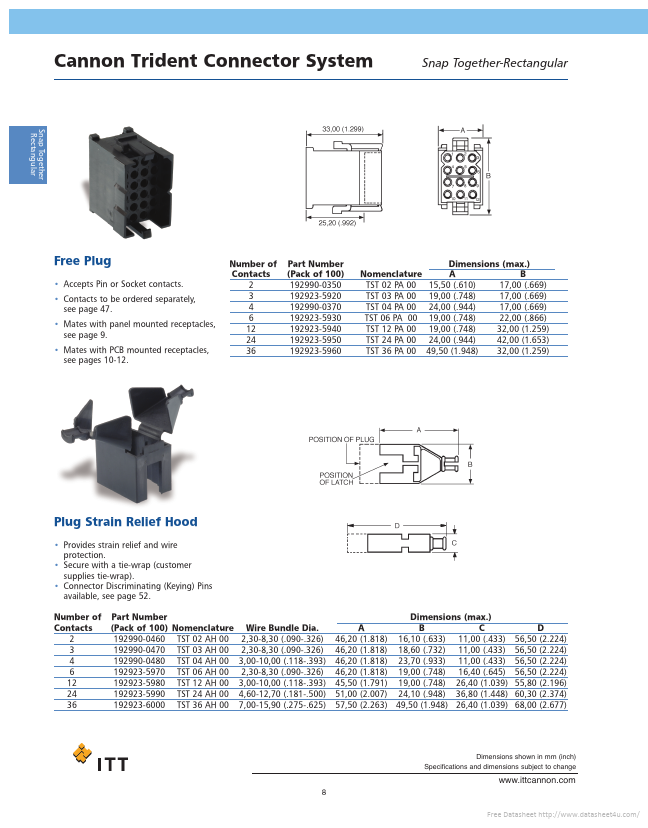
Insulator Material Black Nylon, UL 94V-0 Finish None Dimensions shown in mm (inch) Specifications and dimensions subject to change www.ittcannon.com 6 Free Datasheet http://www.datasheet4u.com/ Cannon Trident Connector System Snap Together-Rectangular 2 Way Plug Receptacle 3 Way Plug Receptac

Features

  • Easy cost effective installation.
  • Integrally molded latches and connector polarization.
  • Recognized under the component program of UL Inc. and CSA.
  • Inter-connector discrimination facilities available.
  • Accepts formed (stamped) or machined contacts, see page 47. Performance Specifications Operating Voltage Contact Current Rating Temperature Range 250 V ac rms Up to 13 A (For derating curve, see page 44).
  • 55°C to 105°C (.
  • 67°F to 221°.

📥 Download Datasheet

Datasheet preview – TST02AH00

Datasheet Details

Part number TST02AH00
Manufacturer ITT
File Size 524.19 KB
Description Cannon Trident Connector System
Datasheet download datasheet TST02AH00 Datasheet
Additional preview pages of the TST02AH00 datasheet.
Other Datasheets by ITT

Full PDF Text Transcription

Click to expand full text
Cannon Trident Connector System Snap Together-Rectangular These are low installed cost connectors rated for up to 13 A and 250 V ac. They are typically used for circuit board and internal wiring applications. Snap Together connectors facilitate easy assembly and removal of equipment such as motors, fans, transformers, etc. Snap Together Rectangular Applications: • Circuit board connections. • Internal connections. Product Features • Easy cost effective installation. • Integrally molded latches and connector polarization. • Recognized under the component program of UL Inc. and CSA. • Inter-connector discrimination facilities available. • Accepts formed (stamped) or machined contacts, see page 47.
Published: |