Datasheet4U Logo Datasheet4U.com

LM194 - LM194/LM394 Supermatch Pair

Download the LM194 datasheet PDF. This datasheet also covers the LM1 variant, as both devices belong to the same lm194/lm394 supermatch pair family and are provided as variant models within a single manufacturer datasheet.

General Description

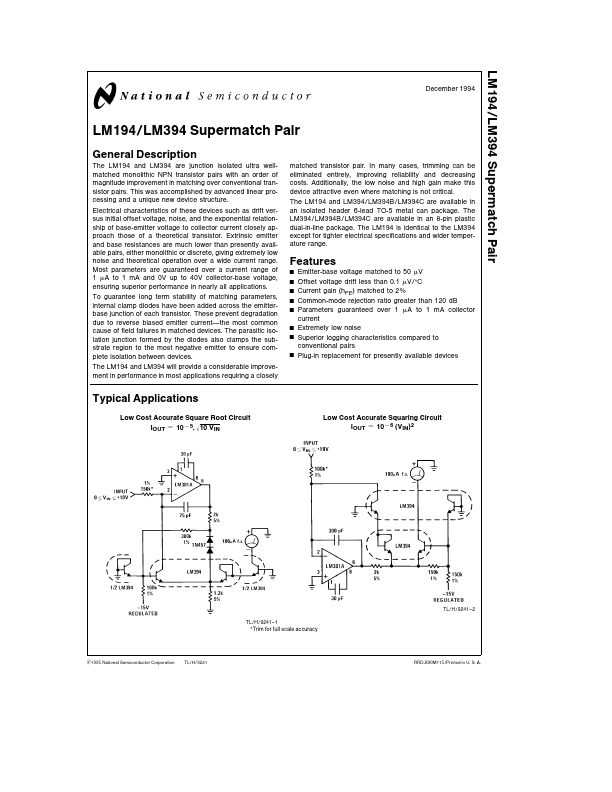
The LM194 and LM394 are junction isolated ultra wellmatched monolithic NPN transistor pairs with an order of magnitude improvement in matching over conventional transistor pairs This was accomplished by advanced linear processing and a unique new device structure Electrical characteristics of these

Key Features

  • Y Y Y Y Y Y Y Y Emitter-base voltage matched to 50 mV Offset voltage drift less than 0 1 mV C Current gain (hFE) matched to 2% Common-mode rejection ratio greater than 120 dB Parameters guaranteed over 1 mA to 1 mA collector current Extremely low noise Superior logging characteristics compared to conventional pairs Plug-in replacement for presently available devices Typical.

📥 Download Datasheet

Note: The manufacturer provides a single datasheet file (LM1-94.pdf) that lists specifications for multiple related part numbers.

Full PDF Text Transcription (Reference)

The following content is an automatically extracted verbatim text from the original manufacturer datasheet and is provided for reference purposes only.

View original datasheet text
LM194 LM394 Supermatch Pair December 1994 LM194 LM394 Supermatch Pair General Description The LM194 and LM394 are junction isolated ultra wellmatched monolithic NPN transistor pairs with an order of magnitude improvement in matching over conventional transistor pairs This was accomplished by advanced linear processing and a unique new device structure Electrical characteristics of these devices such as drift versus initial offset voltage noise and the exponential relationship of base-emitter voltage to collector current closely approach those of a theoretical transistor Extrinsic emitter and base resistances are much lower than presently available pairs either monolithic or discrete giving extremely low noise and theoretical operation over a wide current range Most parameters are guarant