

Datasheet4U Logo Datasheet4U.com

TY72011AP2 - Single Ended PWM Controller Featuring QR Operation and Soft Frequency Foldback

Description

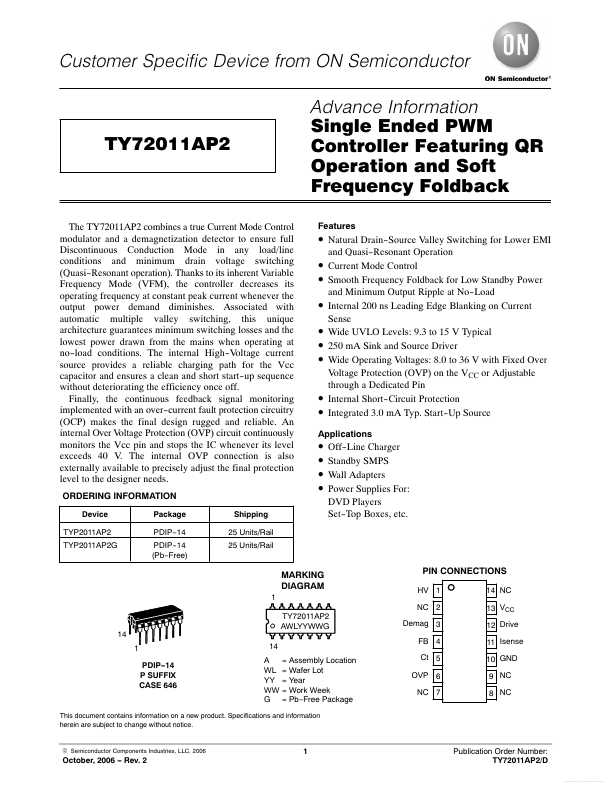
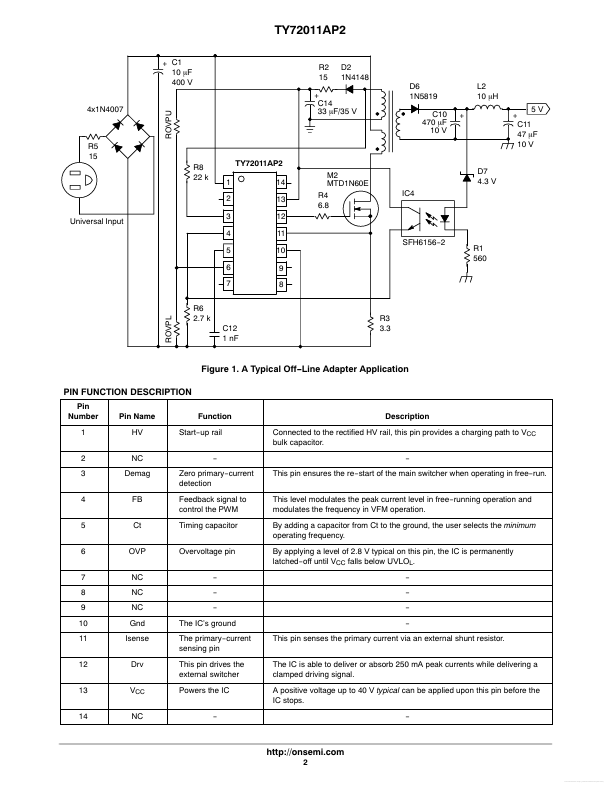
Pin Number 1 2 3 4 5 6 7 8 9 10 11 12 13 14 Pin Name HV NC Demag FB Ct OVP NC NC NC Gnd Isense Drv VCC NC Function Start-up rail Zero primary-current detection Feedback signal to control the PWM Timing capacitor Overvoltage pin The IC's ground The primary-current sensing pin This pin drives the exte

Features

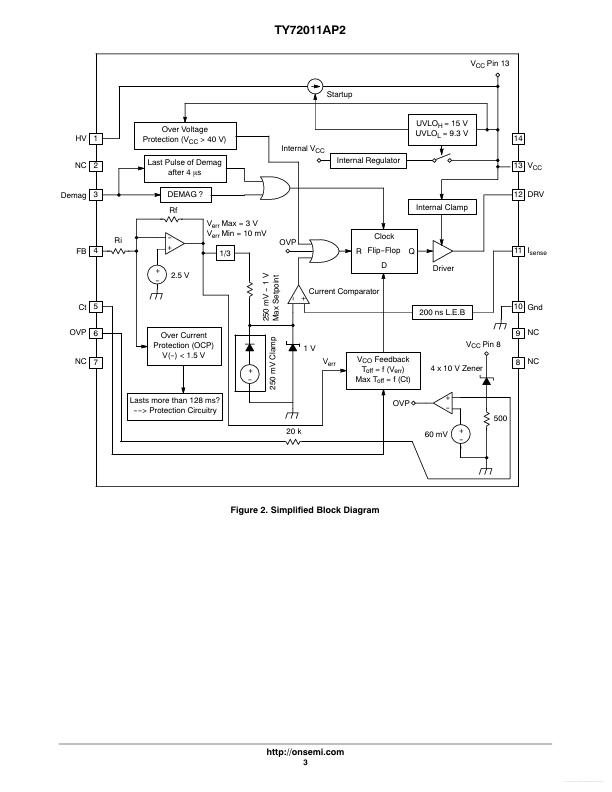
  • TY72011AP2 The TY72011AP2 combines a true Current Mode Control modulator and a demagnetization detector to ensure full Discontinuous Conduction Mode in any load/line conditions and minimum drain voltage switching (Quasi-Resonant operation). Thanks to its inherent Variable Frequency Mode (VFM), the controller decreases its operating frequency at constant peak current whenever the output power demand diminishes. Associated with automatic multiple valley switching, this unique architecture guaran.

📥 Download Datasheet

Datasheet preview – TY72011AP2

Datasheet Details

Part number TY72011AP2
Manufacturer ON Semiconductor
File Size 192.34 KB
Description Single Ended PWM Controller Featuring QR Operation and Soft Frequency Foldback
Datasheet download datasheet TY72011AP2 Datasheet
Additional preview pages of the TY72011AP2 datasheet.
Other Datasheets by ON Semiconductor

Full PDF Text Transcription

Click to expand full text
Customer Specific Device from ON Semiconductor Advance Information Single Ended PWM Controller Featuring QR Operation and Soft Frequency Foldback Features TY72011AP2 The TY72011AP2 combines a true Current Mode Control modulator and a demagnetization detector to ensure full Discontinuous Conduction Mode in any load/line conditions and minimum drain voltage switching (Quasi-Resonant operation). Thanks to its inherent Variable Frequency Mode (VFM), the controller decreases its operating frequency at constant peak current whenever the output power demand diminishes. Associated with automatic multiple valley switching, this unique architecture guarantees minimum switching losses and the lowest power drawn from the mains when operating at no-load conditions.
Published: |