Datasheet4U Logo Datasheet4U.com

AN240 - Interfacing 3V and 5V Applications

Key Features

  • can only be made with 3V. Or vice versa! With the introduction of new standards such as 2.2-2.7V or even 1.7V we expect that interfacing between systems that use different supply voltages will be an actual issue for many years to come. This.

📥 Download Datasheet

Full PDF Text Transcription (Reference)

The following content is an automatically extracted verbatim text from the original manufacturer datasheet and is provided for reference purposes only.

View original datasheet text
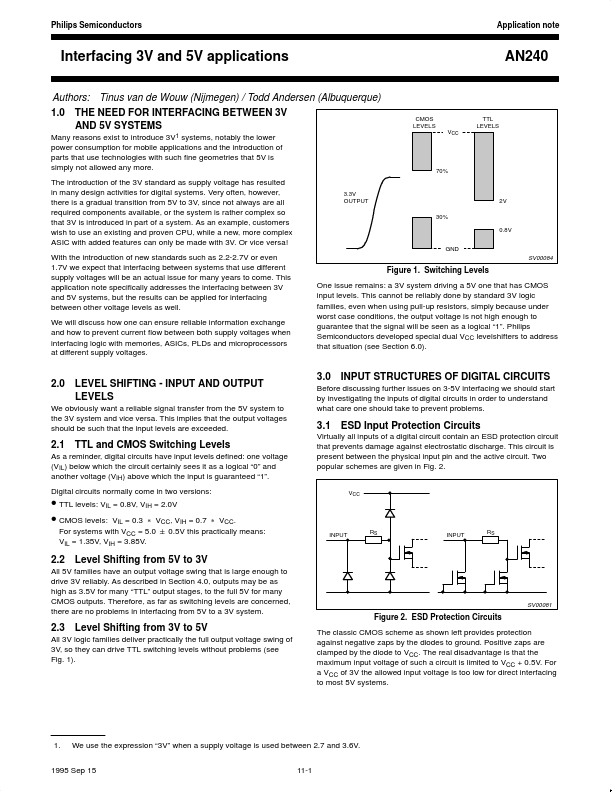
Philips Semiconductors Application note Interfacing 3V and 5V applications Authors: Tinus van de Wouw (Nijmegen) / Todd Andersen (Albuquerque) 1.0 THE NEED FOR INTERFACING BETWEEN 3V AND 5V SYSTEMS Many reasons exist to introduce 3V1 systems, notably the lower power consumption for mobile applications and the introduction of parts that use technologies with such fine geometries that 5V is simply not allowed any more. The introduction of the 3V standard as supply voltage has resulted in many design activities for digital systems. Very often, however, there is a gradual transition from 5V to 3V, since not always are all required components available, or the system is rather complex so that 3V is introduced in part of a system.