Datasheet4U Logo Datasheet4U.com

ISL55143 - High-Speed 18V CMOS Comparators

Download the ISL55143 datasheet PDF. This datasheet also covers the ISL55141 variant, as both devices belong to the same high-speed 18v cmos comparators family and are provided as variant models within a single manufacturer datasheet.

General Description

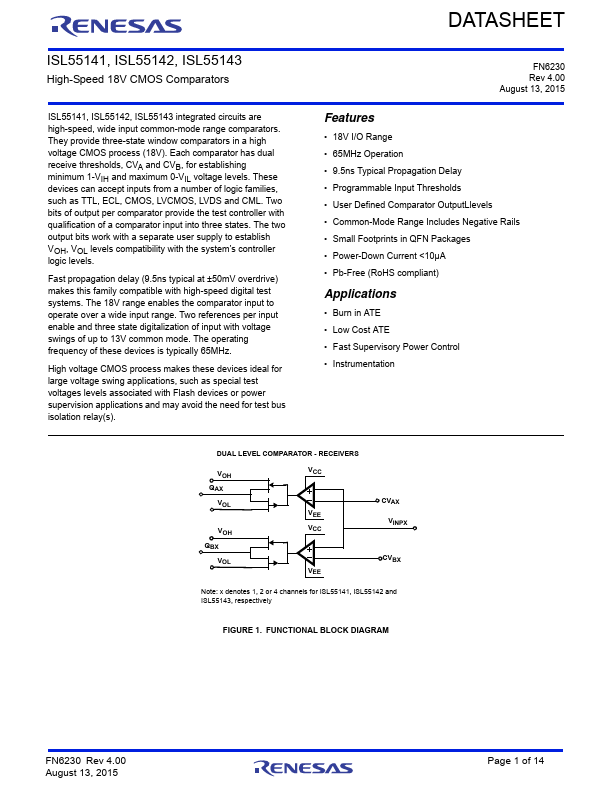
Negative supply input Channel A, CVAX reference driven.

Comparator output.

Channel B, CVBX reference driven.

Key Features

  • 18V I/O Range.
  • 65MHz Operation.
  • 9.5ns Typical Propagation Delay.
  • Programmable Input Thresholds.
  • User Defined Comparator OutputLlevels.
  • Common-Mode Range Includes Negative Rails.
  • Small Footprints in QFN Packages.
  • Power-Down Current.

📥 Download Datasheet

Note: The manufacturer provides a single datasheet file (ISL55141-Renesas.pdf) that lists specifications for multiple related part numbers.

Datasheet Details

Part number ISL55143
Manufacturer Renesas
File Size 715.77 KB
Description High-Speed 18V CMOS Comparators
Datasheet download datasheet ISL55143 Datasheet

Full PDF Text Transcription (Reference)

The following content is an automatically extracted verbatim text from the original manufacturer datasheet and is provided for reference purposes only.

View original datasheet text
DATASHEET ISL55141, ISL55142, ISL55143 High-Speed 18V CMOS Comparators ISL55141, ISL55142, ISL55143 integrated circuits are high-speed, wide input common-mode range comparators. They provide three-state window comparators in a high voltage CMOS process (18V). Each comparator has dual receive thresholds, CVA and CVB, for establishing minimum 1-VIH and maximum 0-VIL voltage levels. These devices can accept inputs from a number of logic families, such as TTL, ECL, CMOS, LVCMOS, LVDS and CML. Two bits of output per comparator provide the test controller with qualification of a comparator input into three states. The two output bits work with a separate user supply to establish VOH, VOL levels compatibility with the system’s controller logic levels. Fast propagation delay (9.