Datasheet4U Logo Datasheet4U.com

SF83 - GLASS PASSIVATED SUPER FAST RECTIFIER

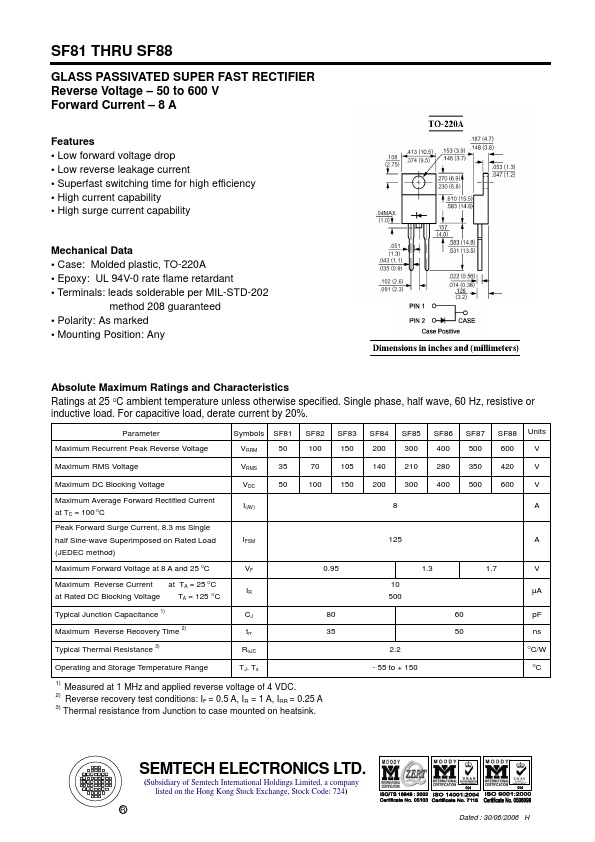
Download the SF83 datasheet PDF. This datasheet also covers the SF81 variant, as both devices belong to the same glass passivated super fast rectifier family and are provided as variant models within a single manufacturer datasheet.

Key Features

  • Low forward voltage drop.
  • Low reverse leakage current.
  • Superfast switching time for high efficiency.
  • High current capability.
  • High surge current capability Mechanical Data.
  • Case: Molded plastic, TO-220A.
  • Epoxy: UL 94V-0 rate flame retardant.
  • Terminals: leads solderable per MIL-STD-202 method 208 guaranteed.
  • Polarity: As marked.
  • Mounting Position: Any Absolute Maximum Ratings and Characteristics Ratings at.

📥 Download Datasheet

Note: The manufacturer provides a single datasheet file (SF81-SEMTECH.pdf) that lists specifications for multiple related part numbers.

Datasheet Details

Part number SF83
Manufacturer SEMTECH
File Size 375.95 KB
Description GLASS PASSIVATED SUPER FAST RECTIFIER
Datasheet download datasheet SF83 Datasheet

Full PDF Text Transcription for SF83 (Reference)

Note: Below is a high-fidelity text extraction (approx. 800 characters) for SF83. For precise diagrams, and layout, please refer to the original PDF.

SF81 THRU SF88 GLASS PASSIVATED SUPER FAST RECTIFIER Reverse Voltage – 50 to 600 V Forward Current – 8 A Features • Low forward voltage drop • Low reverse leakage current...

View more extracted text
8 A Features • Low forward voltage drop • Low reverse leakage current • Superfast switching time for high efficiency • High current capability • High surge current capability Mechanical Data • Case: Molded plastic, TO-220A • Epoxy: UL 94V-0 rate flame retardant • Terminals: leads solderable per MIL-STD-202 method 208 guaranteed • Polarity: As marked • Mounting Position: Any Absolute Maximum Ratings and Characteristics Ratings at 25 OC ambient temperature unless otherwise specified. Single phase, half wave, 60 Hz, resistive or inductive load. For capacitive load, derate current by 20%.