


Datasheet4U Logo Datasheet4U.com

STRW6735 - Quasi-Resonant Topology Primary Switching Regulators

This page provides the datasheet information for the STRW6735, a member of the STR-W6735 Quasi-Resonant Topology Primary Switching Regulators family.

Datasheet Summary

Description

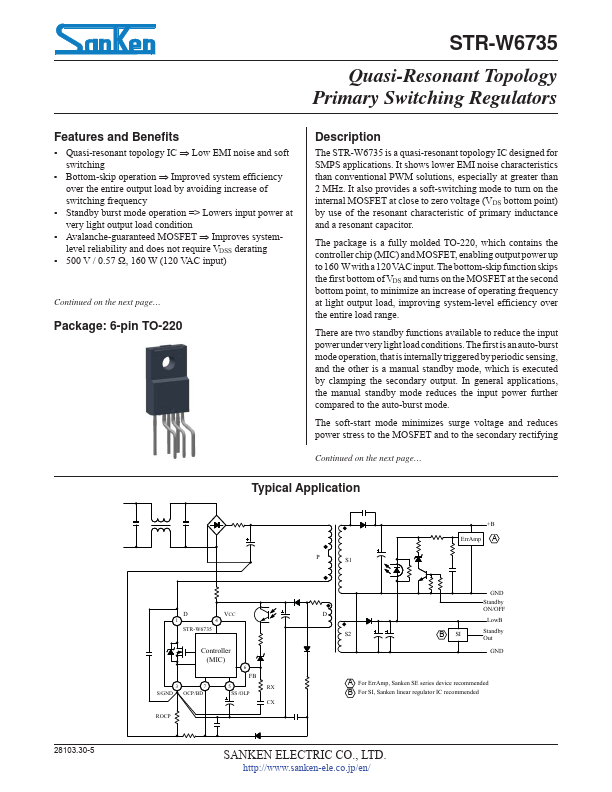
The STR-W6735 is a quasi-resonant topology IC designed for SMPS applications.

It shows lower EMI noise characteristics than conventional PWM solutions, especially at greater than 2 MHz.

Features

  • Quasi-resonant topology IC  Low EMI noise and soft switching.
  • Bottom-skip operation  Improved system efficiency over the entire output load by avoiding increase of switching frequency.
  • Standby burst mode operation => Lowers input power at very light output load condition.
  • Avalanche-guaranteed MOSFET  Improves systemlevel reliability and does not require VDSS derating.
  • 500 V / 0.57 Ω, 160 W (120 VAC input) Continued on the next page… Package: 6-pin TO-220.

📥 Download Datasheet

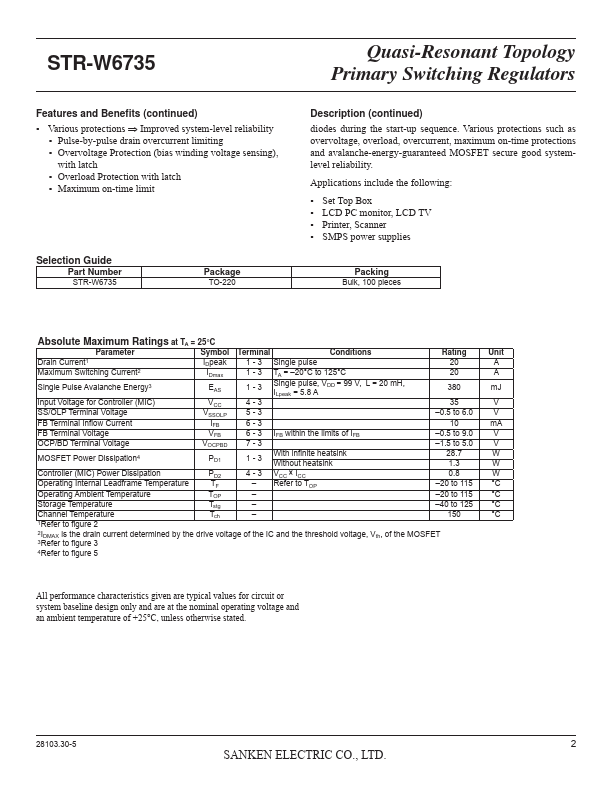
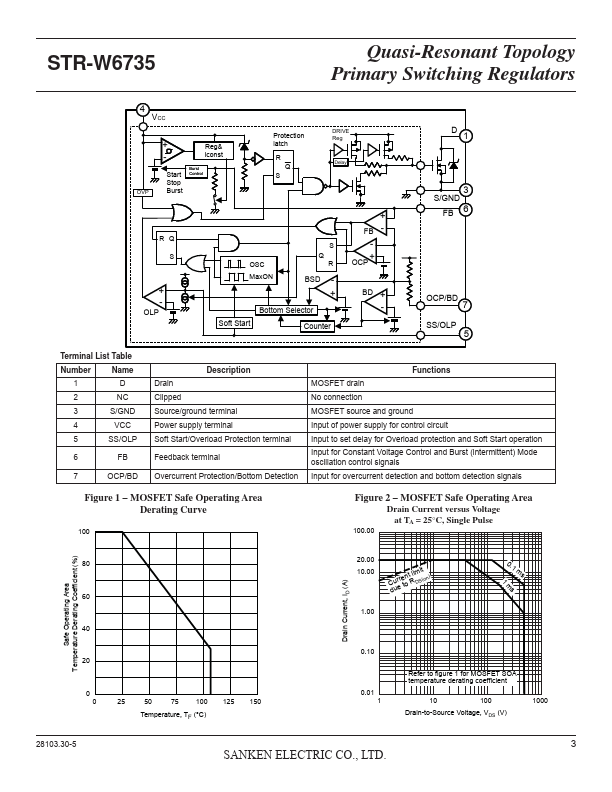
Datasheet preview – STRW6735

Datasheet Details

Part number STRW6735
Manufacturer Sanken
File Size 225.98 KB
Description Quasi-Resonant Topology Primary Switching Regulators
Datasheet download datasheet STRW6735 Datasheet
Additional preview pages of the STRW6735 datasheet.
Other Datasheets by Sanken

Full PDF Text Transcription

Click to expand full text
STR-W6735 Quasi-Resonant Topology Primary Switching Regulators Features and Benefits ▪ Quasi-resonant topology IC  Low EMI noise and soft switching ▪ Bottom-skip operation  Improved system efficiency over the entire output load by avoiding increase of switching frequency ▪ Standby burst mode operation => Lowers input power at very light output load condition ▪ Avalanche-guaranteed MOSFET  Improves systemlevel reliability and does not require VDSS derating ▪ 500 V / 0.57 Ω, 160 W (120 VAC input) Continued on the next page… Package: 6-pin TO-220 Description The STR-W6735 is a quasi-resonant topology IC designed for SMPS applications. It shows lower EMI noise characteristics than conventional PWM solutions, especially at greater than 2 MHz.
Published: |