

Datasheet4U Logo Datasheet4U.com

LV8095LQ - Bi-CMOS IC For VCMs Constant-current Driver IC

General Description

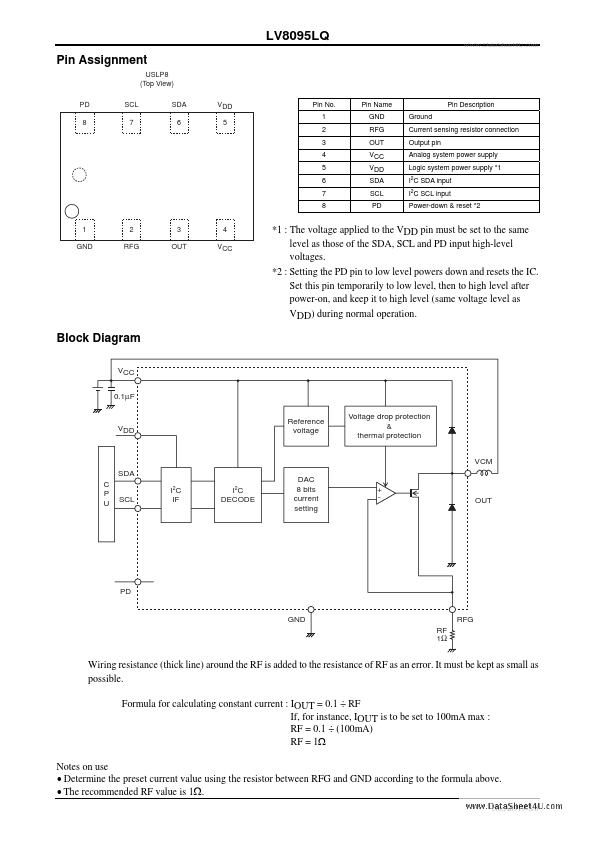
Current sensing resistor connection Output pin Analog system power supply Logic system power supply 1 I2C SDA input I2C SCL input Power-down & reset 2 1 GND 2 RFG 3 OUT 4 VCC 1 : The voltage applied to the VDD pin must be set to the same level as those of the SDA, SCL and PD inp

Key Features

  • Constant current driver for voice coil motors.
  • Constant current control enabled by DAC (8 bits).
  • Wide operating voltage range (2.5 to 5.5V).
  • I2C bus control supported.
  • No external capacitors needed (capacitor-less).
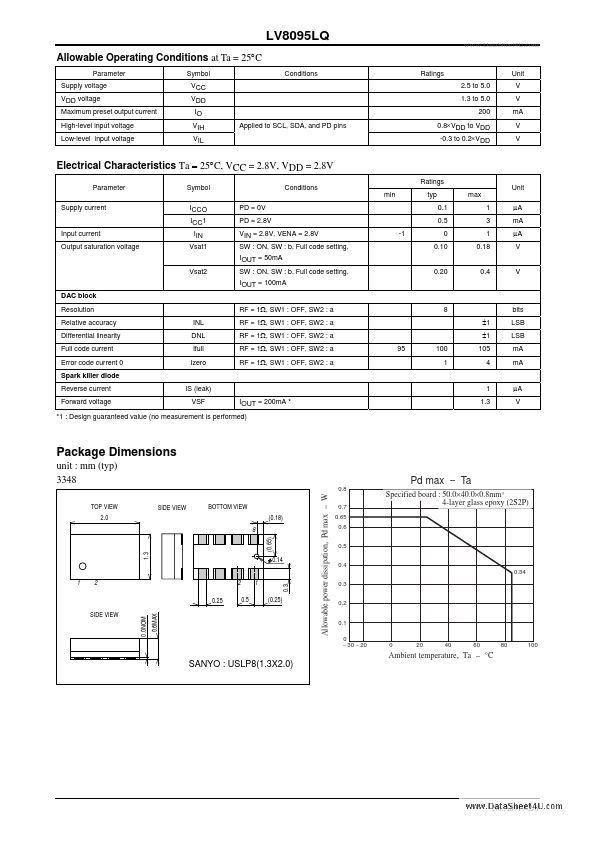
  • Ultraminiature package (USLP8 : 2.0×1.3×0.56mm) for easy soldering.
  • Built-in thermal protection circuit.
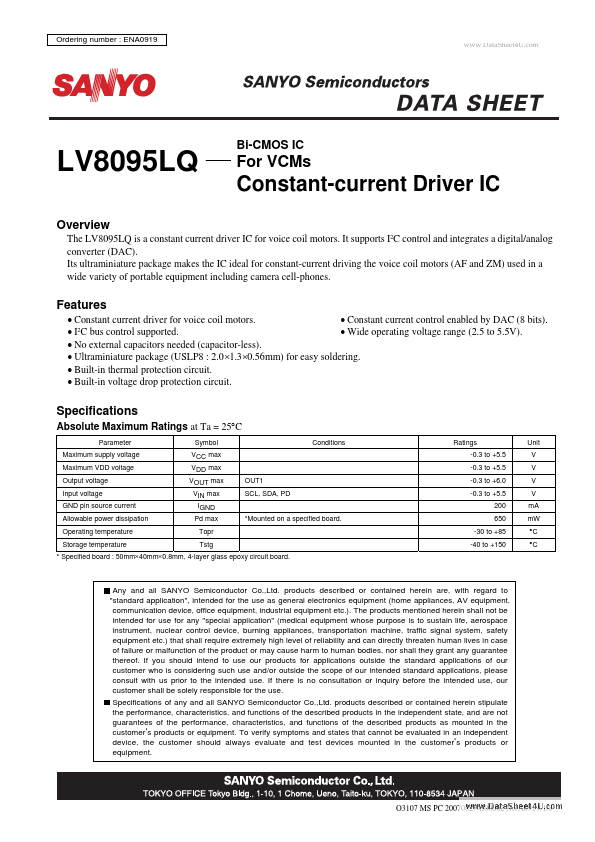
  • Built-in voltage drop protection circuit. Specifications Absolute Maximum Ratings at Ta = 25°C Par.

📥 Download Datasheet

Datasheet Details

Part number LV8095LQ
Manufacturer Sanyo Semiconductors
File Size 116.11 KB
Description Bi-CMOS IC For VCMs Constant-current Driver IC
Datasheet download datasheet LV8095LQ Datasheet

Full PDF Text Transcription (Reference)

The following content is an automatically extracted verbatim text from the original manufacturer datasheet and is provided for reference purposes only.

View original datasheet text
Ordering number : ENA0919 www.DataSheet4U.com LV8095LQ Overview Bi-CMOS IC For VCMs Constant-current Driver IC The LV8095LQ is a constant current driver IC for voice coil motors. It supports I2C control and integrates a digital/analog converter (DAC). Its ultraminiature package makes the IC ideal for constant-current driving the voice coil motors (AF and ZM) used in a wide variety of portable equipment including camera cell-phones. Features • Constant current driver for voice coil motors. • Constant current control enabled by DAC (8 bits). • Wide operating voltage range (2.5 to 5.5V). • I2C bus control supported. • No external capacitors needed (capacitor-less). • Ultraminiature package (USLP8 : 2.0×1.3×0.56mm) for easy soldering. • Built-in thermal protection circuit.