

Datasheet4U Logo Datasheet4U.com

GBJ406 - GLASS PASSIVATED BRIDGE RECTIFIER

Download the GBJ406 datasheet PDF. This datasheet also covers the GBJ4005 variant, as both devices belong to the same glass passivated bridge rectifier family and are provided as variant models within a single manufacturer datasheet.

Key Features

  • Glass passivated chip junction.
  • Reliable low cost construction utilizing molded plastic technique.
  • Ideal for printed circuit board.
  • Low reverse leakage current.
  • Low forward voltage drop.
  • High surge current capabiliy Mechanical Data.
  • Case:Molded plastic, GBJ 4.
  • Terminals:Terminals: Leads solderable per MIL-STD-202 method 208 guaranteed.
  • Epoxy: UL 94V-0 rate flame retardant.
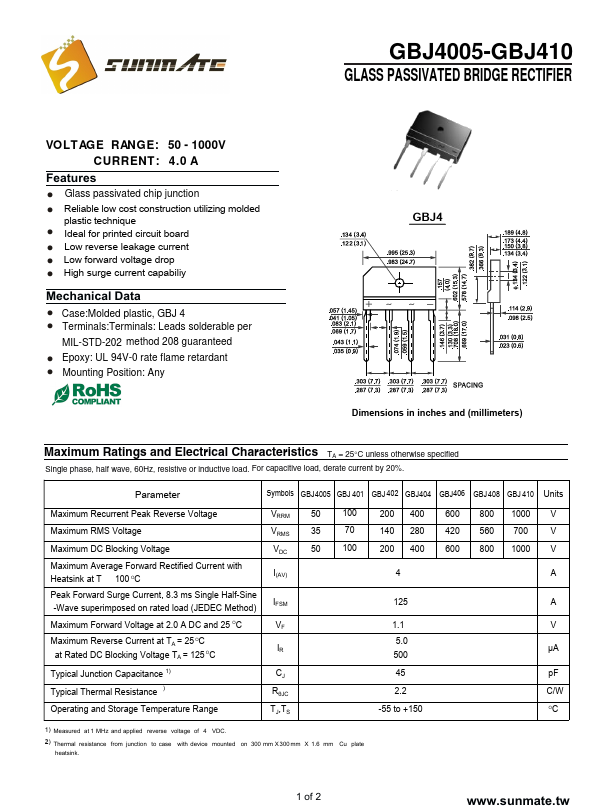
  • Mounting Position: Any GBJ4 Dimensions in inches and (millimeters) Max.

📥 Download Datasheet

Note: The manufacturer provides a single datasheet file (GBJ4005-Sunmate.pdf) that lists specifications for multiple related part numbers.

Datasheet Details

Part number GBJ406
Manufacturer Sunmate
File Size 600.02 KB
Description GLASS PASSIVATED BRIDGE RECTIFIER
Datasheet download datasheet GBJ406 Datasheet

Full PDF Text Transcription (Reference)

The following content is an automatically extracted verbatim text from the original manufacturer datasheet and is provided for reference purposes only.

View original datasheet text
GBJ4005-GBJ410 GLASS PASSIVATED BRIDGE RECTIFIER VOLTAGE RANGE: 50 - 1000V CURRENT: 4.0 A Features ● Glass passivated chip junction ● Reliable low cost construction utilizing molded plastic technique ● Ideal for printed circuit board ● Low reverse leakage current ● Low forward voltage drop ● High surge current capabiliy Mechanical Data ● Case:Molded plastic, GBJ 4 ● Terminals:Terminals: Leads solderable per MIL-STD-202 method 208 guaranteed ● Epoxy: UL 94V-0 rate flame retardant ● Mounting Position: Any GBJ4 Dimensions in inches and (millimeters) Maximum Ratings and Electrical Characteristics TA = 25°C unless otherwise specified Single phase, half wave, 60Hz, resistive or inductive load. For capacitive load, derate current by 20%.