Datasheet4U Logo Datasheet4U.com

1203 - InGenius High-CMRR Balanced Input Line Receiver

Download the 1203 datasheet PDF. This datasheet also covers the 1203P variant, as both devices belong to the same ingenius high-cmrr balanced input line receiver family and are provided as variant models within a single manufacturer datasheet.

General Description

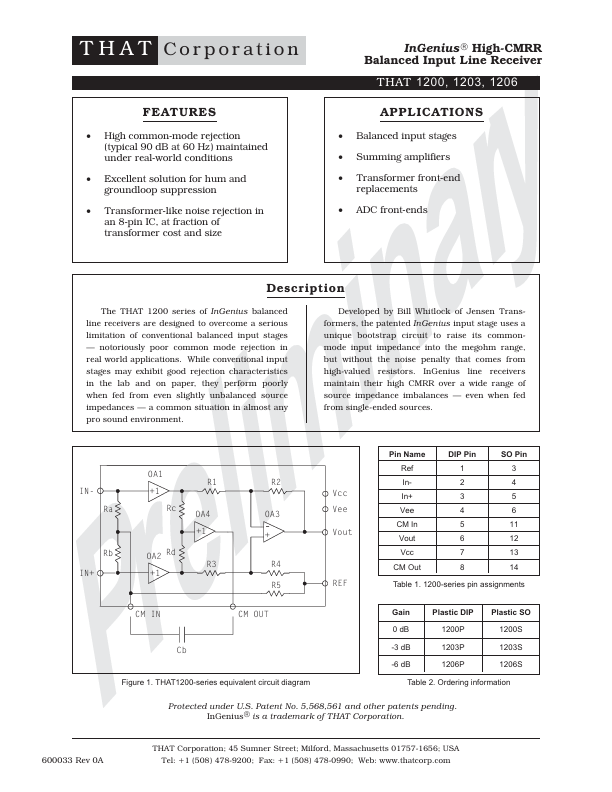
The THAT 1200 series of InGenius balanced line receivers are designed to overcome a serious limitation of conventional balanced input stages

notoriously poor common mode rejection in real world applications.

Key Features

  • High common-mode rejection (typical 90 dB at 60 Hz) maintained under real-world conditions Excellent solution for hum and groundloop suppression Transformer-like noise rejection in an 8-pin IC, at fraction of transformer cost and size.
  • InGeniusâ High-CMRR Balanced Input Line Receiver THAT 1200, 1203, 1206.

📥 Download Datasheet

Note: The manufacturer provides a single datasheet file (1203P_THAT.pdf) that lists specifications for multiple related part numbers.

Datasheet Details

Part number 1203
Manufacturer THAT
File Size 157.57 KB
Description InGenius High-CMRR Balanced Input Line Receiver
Datasheet download datasheet 1203 Datasheet

Full PDF Text Transcription (Reference)

The following content is an automatically extracted verbatim text from the original manufacturer datasheet and is provided for reference purposes only.

View original datasheet text
T H AT Corporation FEATURES · High common-mode rejection (typical 90 dB at 60 Hz) maintained under real-world conditions Excellent solution for hum and groundloop suppression Transformer-like noise rejection in an 8-pin IC, at fraction of transformer cost and size · · · · InGeniusâ High-CMRR Balanced Input Line Receiver THAT 1200, 1203, 1206 APPLICATIONS Balanced input stages Summing amplifiers Transformer front-end replacements ADC front-ends · · Description The THAT 1200 series of InGenius balanced line receivers are designed to overcome a serious limitation of conventional balanced input stages — notoriously poor common mode rejection in real world applications.