

Datasheet4U Logo Datasheet4U.com

UCC2921 - Latchable Negative Floating Hot Swap Power Manager

Download the UCC2921 datasheet PDF. This datasheet also covers the UCC1921 variant, as both devices belong to the same latchable negative floating hot swap power manager family and are provided as variant models within a single manufacturer datasheet.

General Description

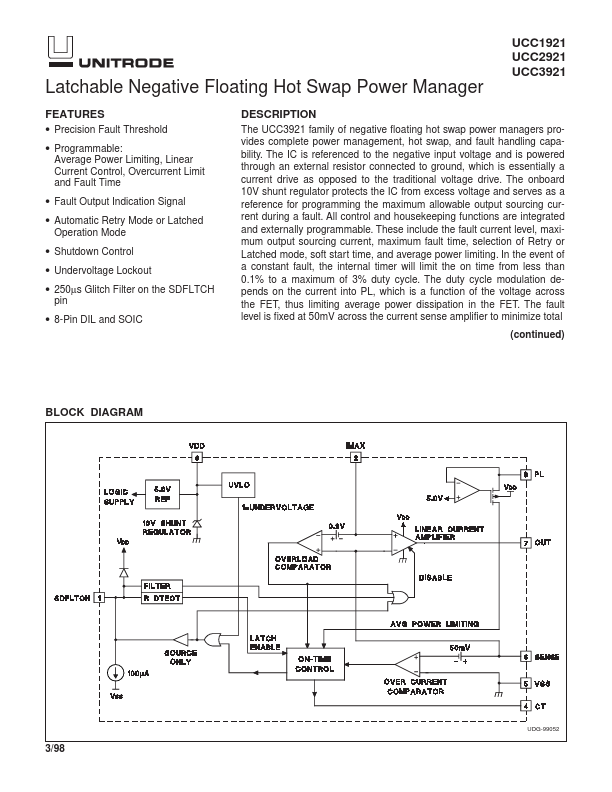
The UCC3921 family of negative floating hot swap power managers provides complete power management, hot swap, and fault handling capability.

Key Features

  • Precision Fault Threshold.
  • Programmable: Average Power Limiting, Linear Current Control, Overcurrent Limit and Fault Time.
  • Fault Output Indication Signal.
  • Automatic Retry Mode or Latched Operation Mode.
  • Shutdown Control.
  • Undervoltage Lockout.
  • 250µs Glitch Filter on the.

📥 Download Datasheet

Note: The manufacturer provides a single datasheet file (UCC1921-Unitrode.pdf) that lists specifications for multiple related part numbers.

Datasheet Details

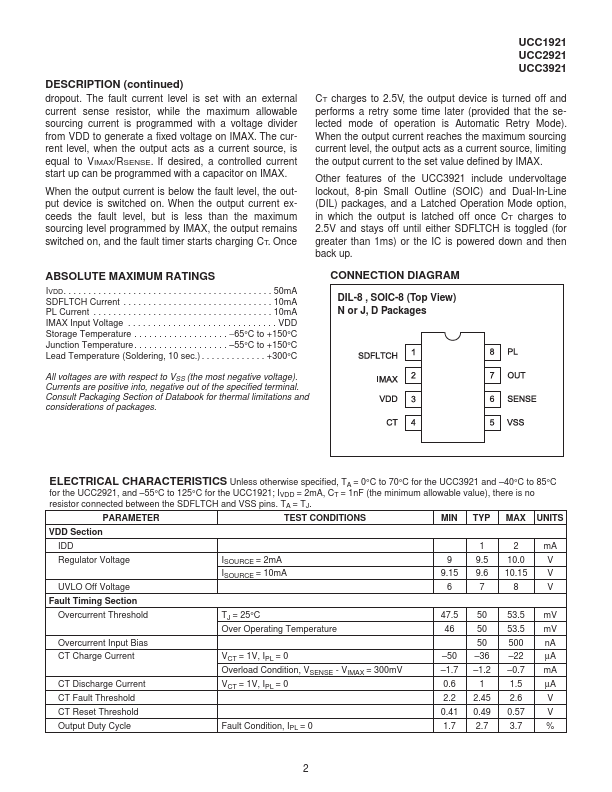
Part number UCC2921
Manufacturer Unitrode
File Size 1.25 MB
Description Latchable Negative Floating Hot Swap Power Manager
Datasheet download datasheet UCC2921 Datasheet

Full PDF Text Transcription (Reference)

The following content is an automatically extracted verbatim text from the original manufacturer datasheet and is provided for reference purposes only.

View original datasheet text
Latchable Negative Floating Hot Swap Power Manager UCC1921 UCC2921 UCC3921 FEATURES • Precision Fault Threshold • Programmable: Average Power Limiting, Linear Current Control, Overcurrent Limit and Fault Time • Fault Output Indication Signal • Automatic Retry Mode or Latched Operation Mode • Shutdown Control • Undervoltage Lockout • 250µs Glitch Filter on the SDFLTCH pin • 8-Pin DIL and SOIC DESCRIPTION The UCC3921 family of negative floating hot swap power managers provides complete power management, hot swap, and fault handling capability. The IC is referenced to the negative input voltage and is powered through an external resistor connected to ground, which is essentially a current drive as opposed to the traditional voltage drive.