

Datasheet4U Logo Datasheet4U.com

XAPP512 - Implementing Keypad Scanners

Description

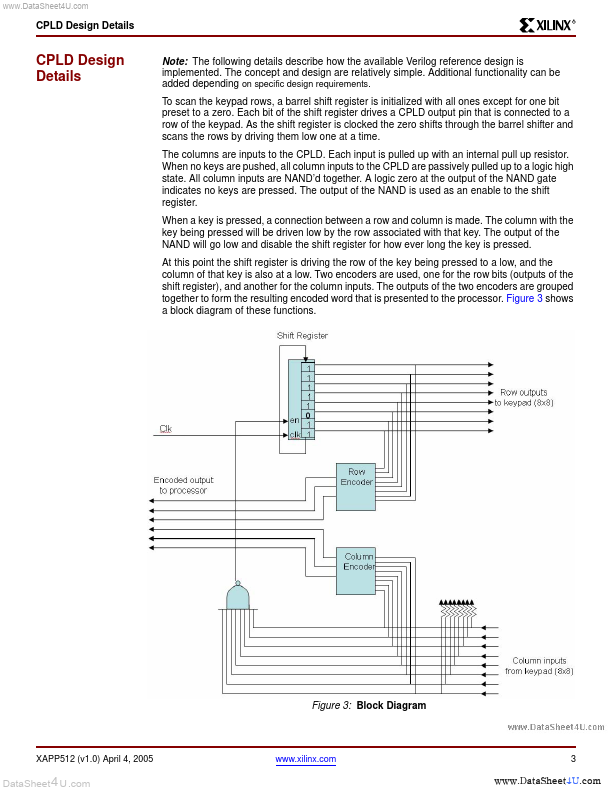
of Verilog source code for a keypad scanner.

The code is used to target the lowest density, 32-macrocell CoolRunnerTM-II XC2C32A CPLD device in a CP56 package (6 mm x 6 mm).

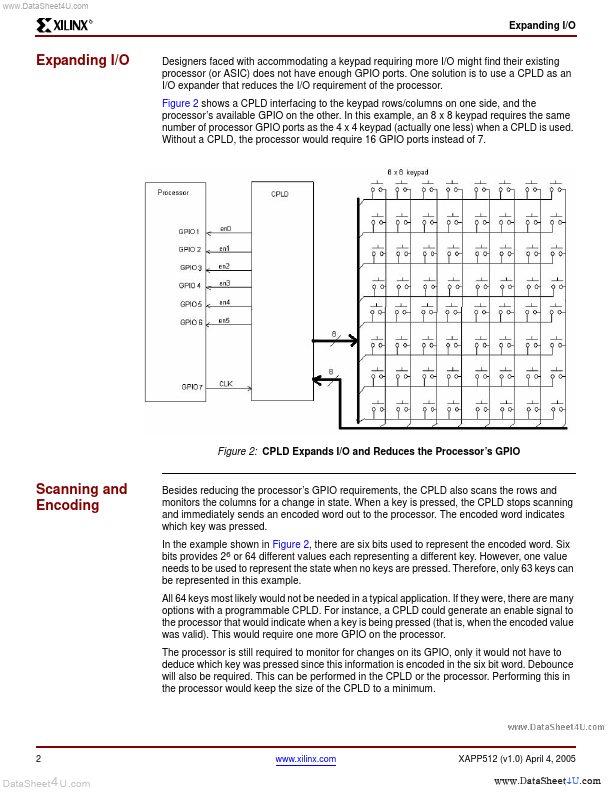
The keypad accommodated in this design has 8 rows and 8 columns.

Features

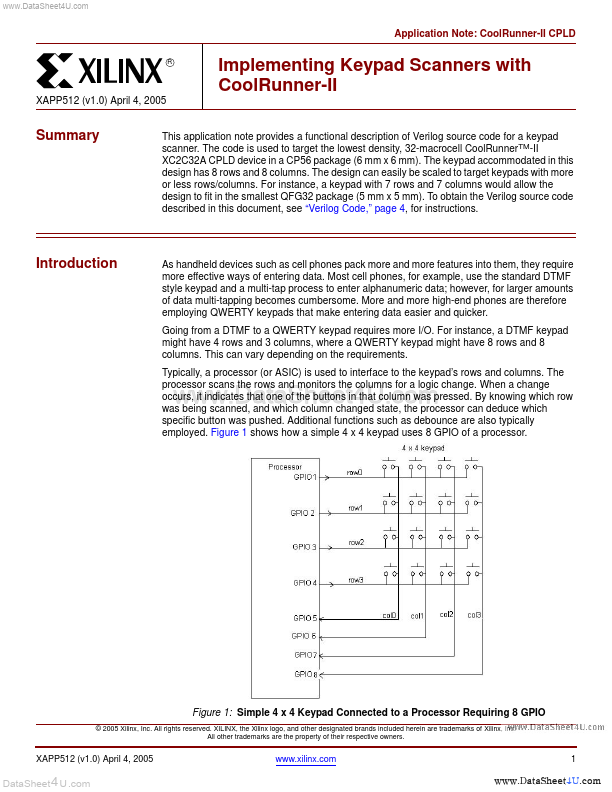
  • into them, they require more effective ways of entering data. Most cell phones, for example, use the standard DTMF style keypad and a multi-tap process to enter alphanumeric data; however, for larger amounts of data multi-tapping becomes cumbersome. More and more high-end phones are therefore employing QWERTY keypads that make entering data easier and quicker. Going from a DTMF to a QWERTY keypad requires more I/O. For instance, a DTMF keypad might have 4 rows and 3 columns, where a QWERTY keypa.

📥 Download Datasheet

Full PDF Text Transcription (Reference)

The following content is an automatically extracted verbatim text from the original manufacturer datasheet and is provided for reference purposes only.

View original datasheet text
www.DataSheet4U.com Application Note: CoolRunner-II CPLD R Implementing Keypad Scanners with CoolRunner-II XAPP512 (v1.0) April 4, 2005 Summary This application note provides a functional description of Verilog source code for a keypad scanner. The code is used to target the lowest density, 32-macrocell CoolRunnerTM-II XC2C32A CPLD device in a CP56 package (6 mm x 6 mm). The keypad accommodated in this design has 8 rows and 8 columns. The design can easily be scaled to target keypads with more or less rows/columns. For instance, a keypad with 7 rows and 7 columns would allow the design to fit in the smallest QFG32 package (5 mm x 5 mm). To obtain the Verilog source code described in this document, see “Verilog Code,” page 4, for instructions.
Published: |