Datasheet4U Logo Datasheet4U.com

DSD1792 - 24 bit 192 khz SAMPLING ADVANCED SEGMENT AUDIO STEREO DIGITAL TO ANALOG CONVERTER

This page provides the datasheet information for the DSD1792, a member of the DSD1792_Burr 24 bit 192 khz SAMPLING ADVANCED SEGMENT AUDIO STEREO DIGITAL TO ANALOG CONVERTER family.

Datasheet Summary

Description

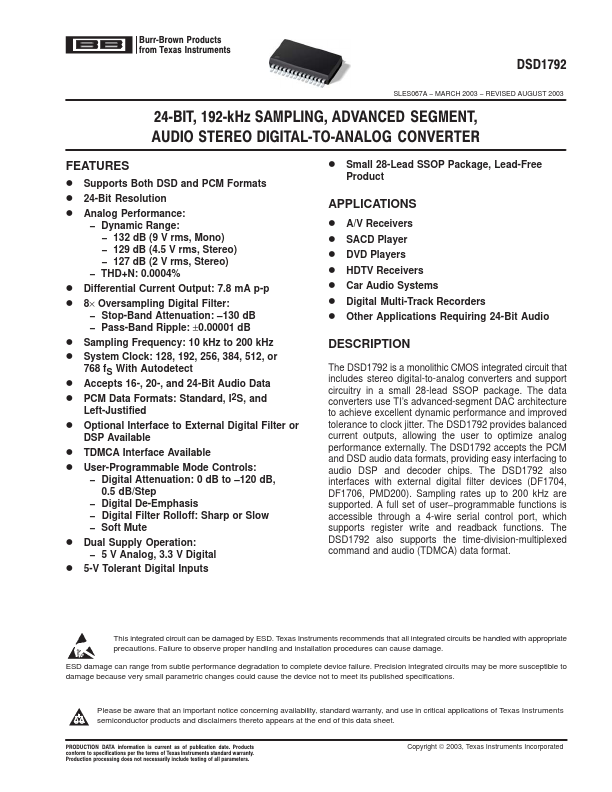
The DSD1792 is a monolithic CMOS integrated circuit that includes stereo digital-to-analog converters and support circuitry in a small 28-lead SSOP package.

The data converters use TI’s advanced-segment DAC architecture to achieve excellent dynamic performance and improved tolerance to clock jitter.

Features

  • D Supports Both DSD and PCM Formats D 24-Bit Resolution D Analog Performance:.
  • Dynamic Range:.
  • 132 dB (9 V rms, Mono).
  • 129 dB (4.5 V rms, Stereo).
  • 127 dB (2 V rms, Stereo).
  • THD+N: 0.0004% Differential Current Output: 7.8 mA p-p 8× Oversampling Digital Filter:.
  • Stop-Band Attenuation:.
  • 130 dB.
  • Pass-Band Ripple: ±0.00001 dB Sampling Frequency: 10 kHz to 200 kHz System Clock: 128, 192, 256, 384, 512, or 768 fS With Autodetect Acc.

📥 Download Datasheet

Datasheet preview – DSD1792

Datasheet Details

Part number DSD1792
Manufacturer Burr-Brown Corporation
File Size 497.29 KB
Description 24 bit 192 khz SAMPLING ADVANCED SEGMENT AUDIO STEREO DIGITAL TO ANALOG CONVERTER
Datasheet download datasheet DSD1792 Datasheet
Additional preview pages of the DSD1792 datasheet.
Other Datasheets by Burr-Brown Corporation

Full PDF Text Transcription

Click to expand full text
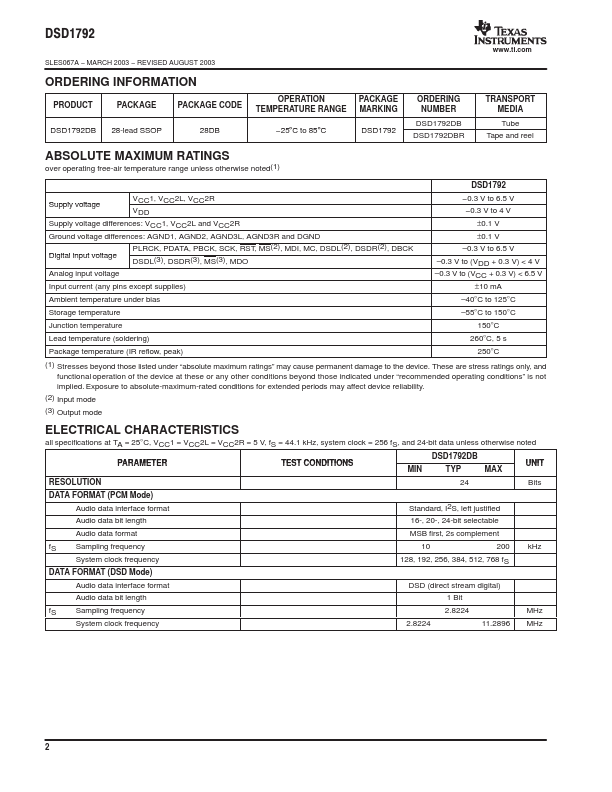
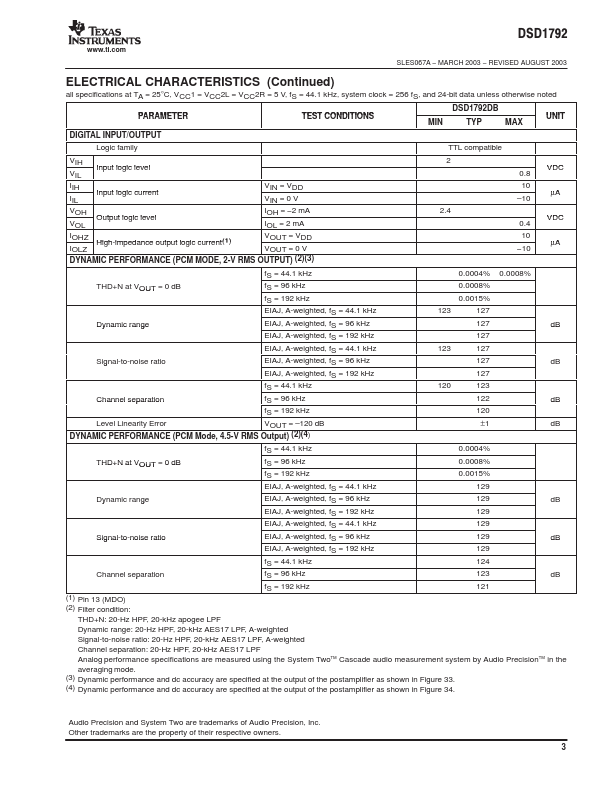
BurrĆBrown Products from Texas Instruments DSD1792 SLES067A − MARCH 2003 − REVISED AUGUST 2003 24ĆBIT, 192ĆkHz SAMPLING, ADVANCED SEGMENT, AUDIO STEREO DIGITALĆTOĆANALOG CONVERTER FEATURES D Supports Both DSD and PCM Formats D 24-Bit Resolution D Analog Performance: − Dynamic Range: − 132 dB (9 V rms, Mono) − 129 dB (4.5 V rms, Stereo) − 127 dB (2 V rms, Stereo) − THD+N: 0.0004% Differential Current Output: 7.8 mA p-p 8× Oversampling Digital Filter: − Stop-Band Attenuation: –130 dB − Pass-Band Ripple: ±0.
Published: |