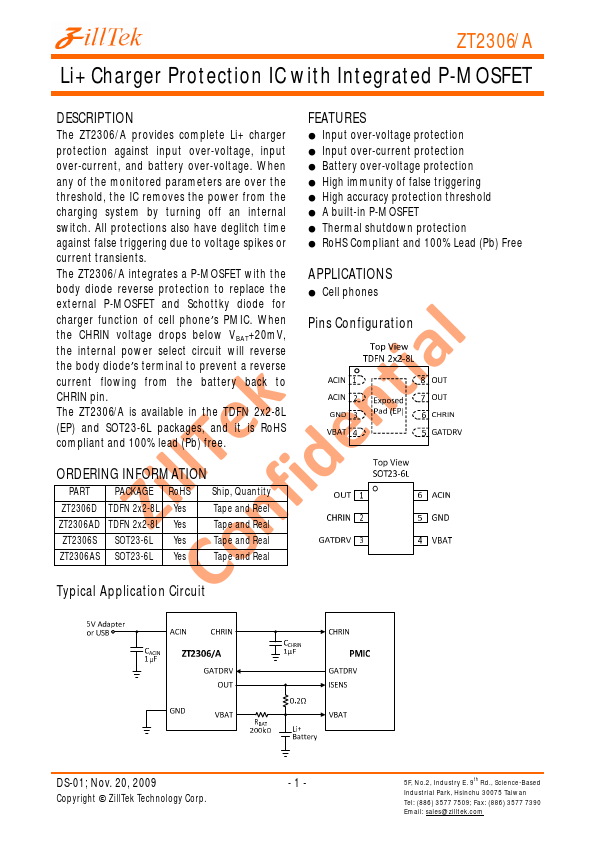
ZT2306A
Overview
- Input over-voltage protection protection against input over-voltage, input
- Input over-current protection over-current, and battery over-voltage. When
- Battery over-voltage protection any of the monitored parameters are over the
- High immunity of false triggering threshold, the IC removes the power from the
- High accuracy protection threshold charging system by turning off an internal
- A built-in P-MOSFET switch. All protections also have deglitch time
- Thermal shutdown protection against false triggering due to voltage spikes or
- RoHS Compliant and 100% Lead (Pb) Free current transients. The ZT2306/A integrates a P-MOSFET with the APPLICATIONS body diode reverse protection to replace the
- Cell phones external P-MOSFET and Schottky diode for charger function of cell phone’s PMIC. When the CHRIN voltage drops below VBAT+20mV, l the internal power select circuit will reverse ia the body diode’s terminal to prevent a reverse current flowing from the battery back to t CHRIN pin. k The ZT2306/A is available in the TDFN 2x2-8L n (EP) and SOT23-6L packages, and it is RoHS e compliant and 100% lead (Pb) free. illT ide ORDERING INFORMATION PART PACKAGE RoHS Ship, Quantity f ZT2306D TDFN 2x2-8L Yes Tape and Reel