Texas Instruments 74AC11874
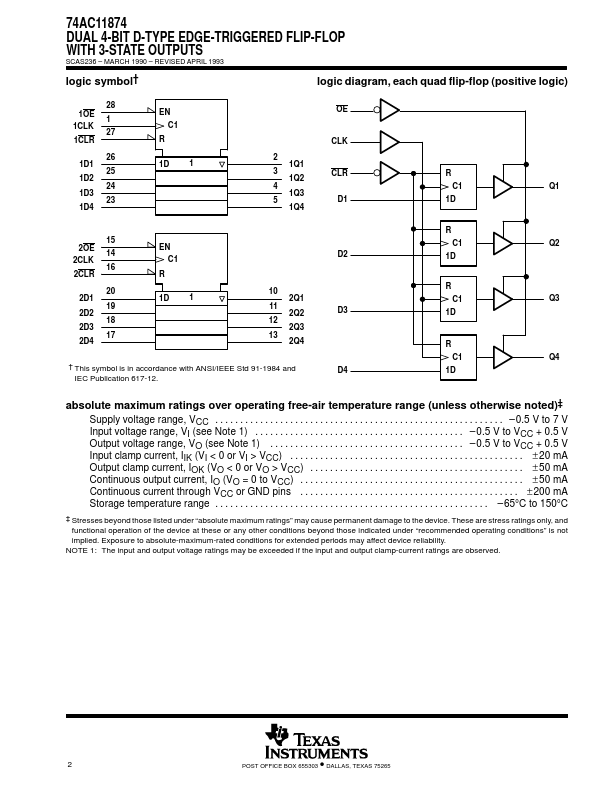
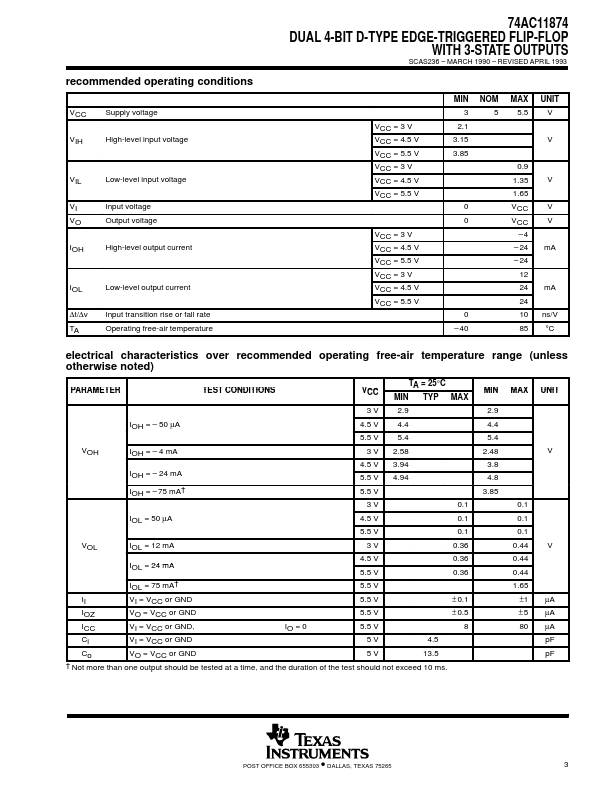
The 74AC11874 has clear (1CLR and 2CLR) inputs and noninverting outputs. The 74AC11874 is characterized for operation from – 40°C to 85°C.| Part No. | 74AC11874 |
|---|---|
| Datasheet | 74AC11874 Download |
| Manufacturer |  Texas Instruments |
| Description | DUAL 4-BIT D-TYPE EDGE-TRIGGERED FLIP-FLOP |
| Buy | Stock & Price |
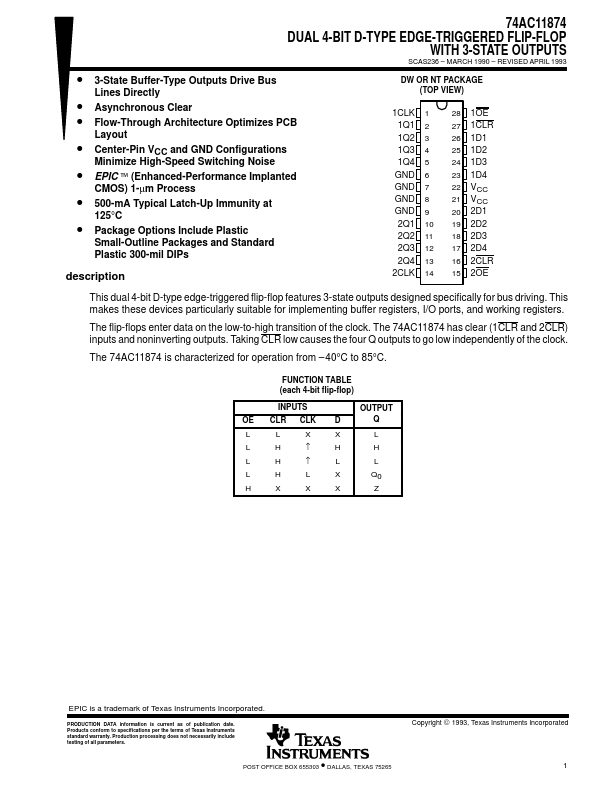
74AC11874 DUAL 4-BIT D-TYPE EDGE-TRIGGERED FLIP-FLOP WITH 3-STATE OUTPUTS SCAS236 – MARCH 1990 – REVISED APRIL 1993
● 3-State Buffer-Type Outputs Drive Bus Lines Directly
● Asynchronous Clear
● Flow-Through Architecture Optimizes PCB Layout
● Center-Pin VCC and GND Configurations Minimize High-Speed Switching Noise
● EPIC ™ (Enhanced-Performance Implanted CMOS) 1-µm Process
● 500-mA Typical Latch-Up Immunity at 125°C
● Package Options Include Plastic Small-Outline Packages and Standard Plastic 300-mil DIPs description DW OR NT PACKAGE (TOP VIEW) 1CLK 1Q1 1Q2 1Q3 1Q4 GND GND GND GND 2Q1 2Q2 2Q3 2Q4 2CLK 1 2 3 4 5 6 7 8 9 10 11 12 13 14 28 1OE 27 1CLR 26 1D1 25 1D2 24 1D3 23 1D4 22 VCC 21 VCC 20 2D1 19 2D2 18 2D3 17 2D4 16 2CLR 15 2OE This dual 4-bit D-type edge-triggered flip-flop features 3-state outputs designed specifically for bus driving. This makes these devices particularly suitable for implementing buffer registers, I/O ports, and working registers. The flip-flops enter data on the low-to-high transition of the clock.