

Datasheet4U Logo Datasheet4U.com

RT9619A - Synchronous-Rectified Buck MOSFET Drivers

Download the RT9619A datasheet PDF. This datasheet also covers the RT9619 variant, as both devices belong to the same synchronous-rectified buck mosfet drivers family and are provided as variant models within a single manufacturer datasheet.

Description

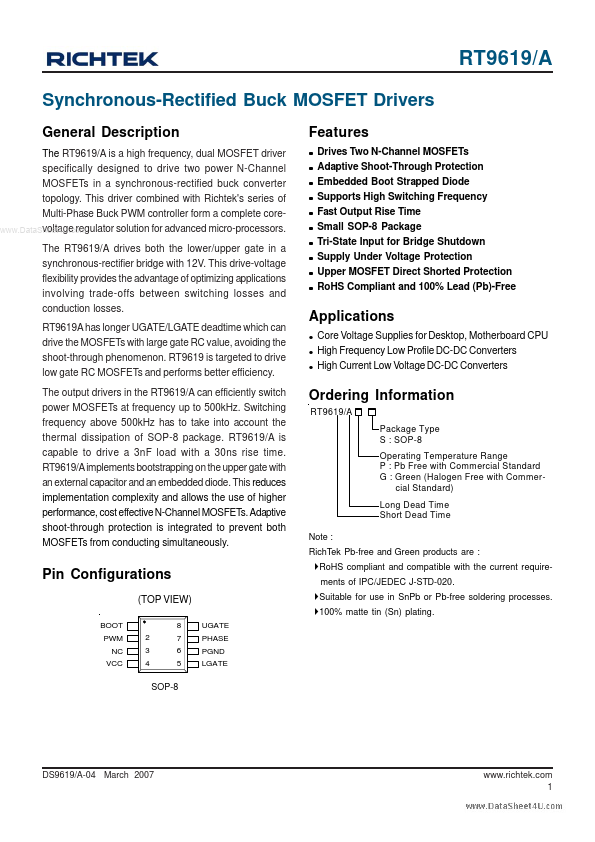
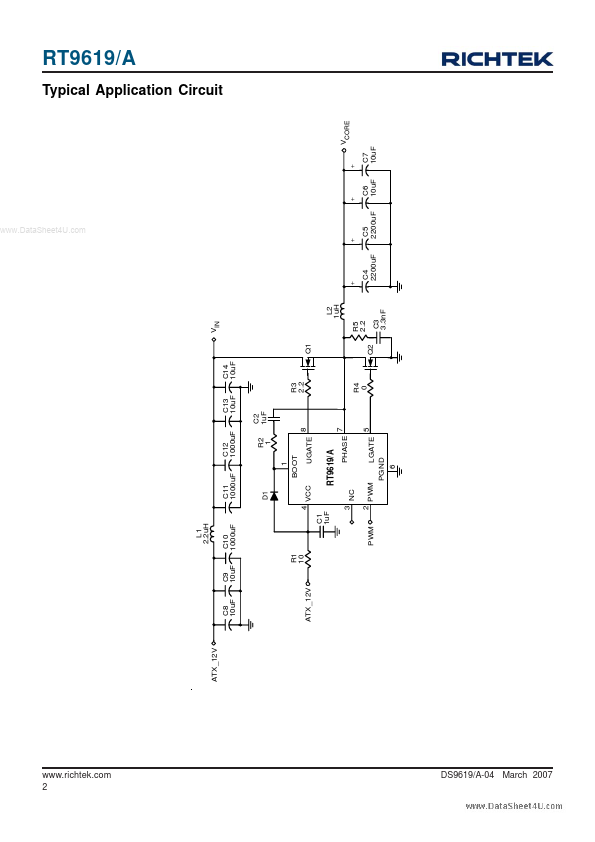
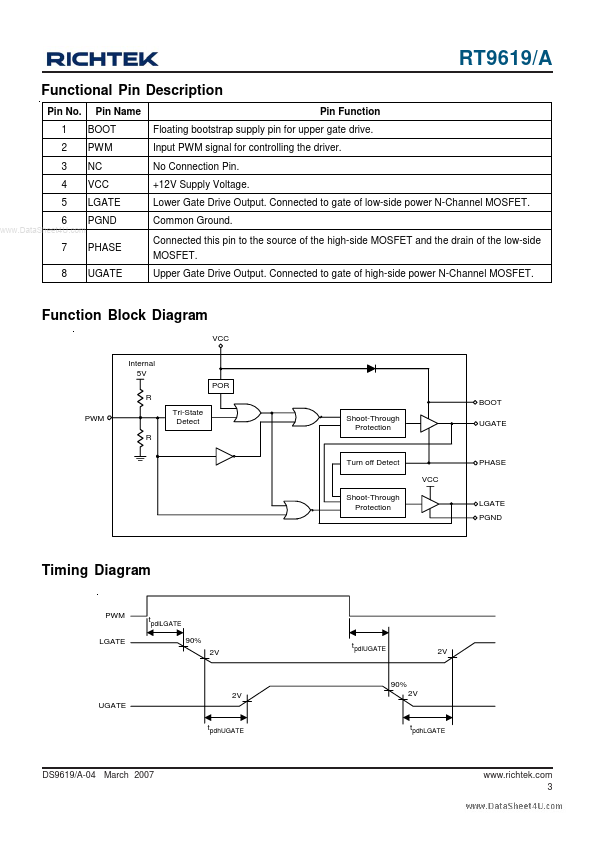
The RT9619/A is a high frequency, dual MOSFET driver specifically designed to drive two power N-Channel MOSFETs in a synchronous-rectified buck converter topology.

Features

  • z z z z z z z z z z Drives Two N-Channel MOSFETs Adaptive Shoot-Through Protection Embedded Boot Strapped Diode Supports High Switching Frequency Fast Output Rise Time Small SOP-8 Package Tri-State Input for Bridge Shutdown Supply Under Voltage Protection Upper MOSFET Direct Shorted Protection RoHS Compliant and 100% Lead (Pb)-Free.

📥 Download Datasheet

Note: The manufacturer provides a single datasheet file (RT9619_RichtekTechnologyCorporation.pdf) that lists specifications for multiple related part numbers.

Datasheet Details

Part number RT9619A
Manufacturer Richtek Technology Corporation
File Size 462.41 KB
Description Synchronous-Rectified Buck MOSFET Drivers
Datasheet download datasheet RT9619A Datasheet

Full PDF Text Transcription

Click to expand full text
RT9619/A Synchronous-Rectified Buck MOSFET Drivers General Description The RT9619/A is a high frequency, dual MOSFET driver specifically designed to drive two power N-Channel MOSFETs in a synchronous-rectified buck converter topology. This driver combined with Richtek's series of Multi-Phase Buck PWM controller form a complete corevoltage regulator solution for advanced micro-processors. www.DataSheet4U.com The RT9619/A drives both the lower/upper gate in a synchronous-rectifier bridge with 12V. This drive-voltage flexibility provides the advantage of optimizing applications involving trade-offs between switching losses and conduction losses. RT9619A has longer UGATE/LGATE deadtime which can drive the MOSFETs with large gate RC value, avoiding the shoot-through phenomenon.
Published: |