Datasheet4U Logo Datasheet4U.com

ALD110800A - PRECISION MATCHED PAIR MOSFET ARRAY

This page provides the datasheet information for the ALD110800A, a member of the ALD110900 PRECISION MATCHED PAIR MOSFET ARRAY family.

Datasheet Summary

Description

ALD110800A/ALD110800/ALD110900A/ALD110900 are high precision monolithic quad/dual N-Channel MOSFETs matched at the factory using ALD’s proven EPAD CMOS technology.

These devices are members of the EPAD® Matched Pair MOSFET Family.

Features

  • Zero-Threshold™ voltage, which reduces or eliminates input to output voltage level shift, including circuits where the signal is referenced to GND or V+. This feature greatly reduces output signal voltage level shift and enhances signal operating range, especially for very low operating voltage environments. With these zero threshold devices, an analog circuit with multiple stages can be constructed to operate at extremely low supply or bias voltage levels. For example, an input amplifier stage.

📥 Download Datasheet

Datasheet preview – ALD110800A

Datasheet Details

Part number ALD110800A
Manufacturer Advanced Linear Devices
File Size 104.51 KB
Description PRECISION MATCHED PAIR MOSFET ARRAY
Datasheet download datasheet ALD110800A Datasheet
Additional preview pages of the ALD110800A datasheet.
Other Datasheets by Advanced Linear Devices

Full PDF Text Transcription

Click to expand full text
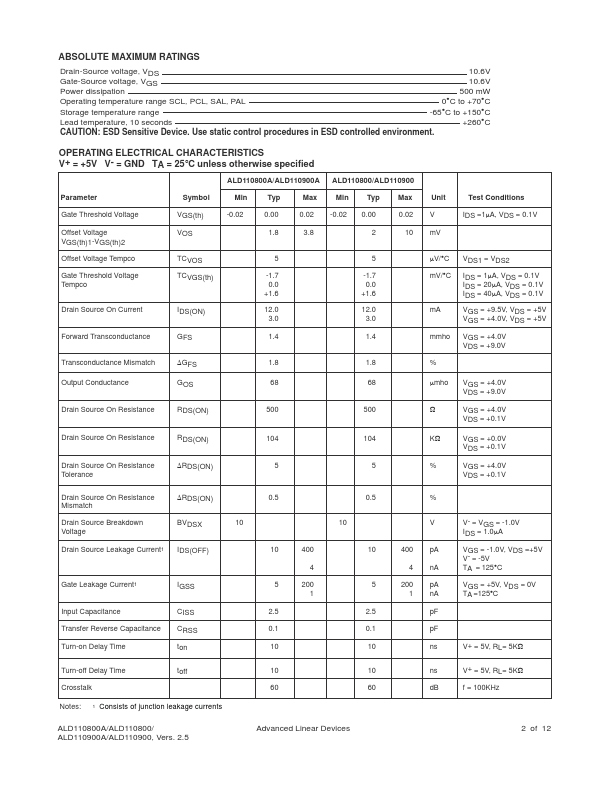
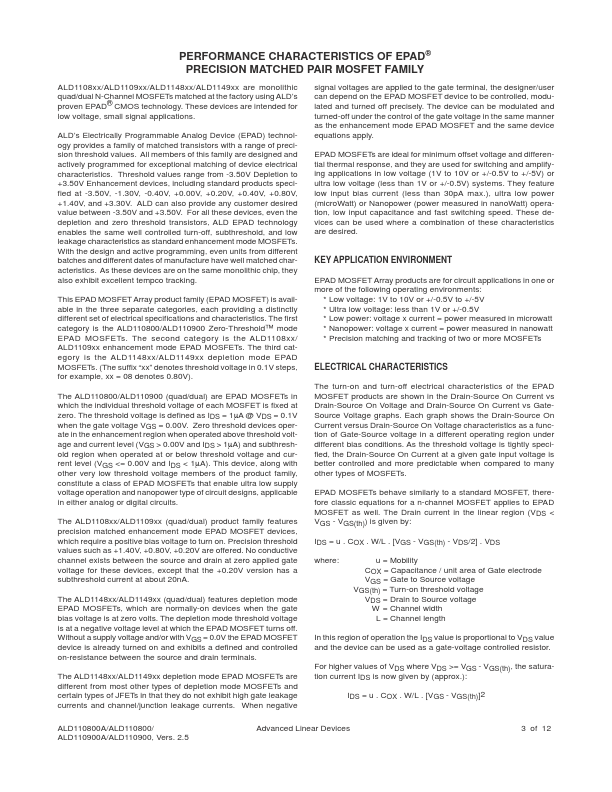
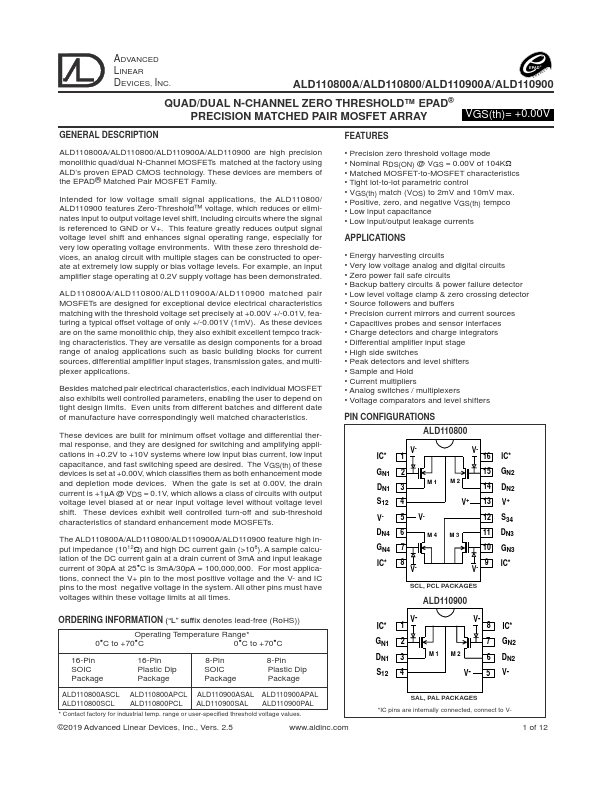
ADVANCED LINEAR DEVICES, INC. e TM EPAD ® ENAB L E D ALD110800A/ALD110800/ALD110900A/ALD110900 QUAD/DUAL N-CHANNEL ZERO THRESHOLD™ EPAD® PRECISION MATCHED PAIR MOSFET ARRAY VGS(th)= +0.00V GENERAL DESCRIPTION ALD110800A/ALD110800/ALD110900A/ALD110900 are high precision monolithic quad/dual N-Channel MOSFETs matched at the factory using ALD’s proven EPAD CMOS technology. These devices are members of the EPAD® Matched Pair MOSFET Family. Intended for low voltage small signal applications, the ALD110800/ ALD110900 features Zero-Threshold™ voltage, which reduces or eliminates input to output voltage level shift, including circuits where the signal is referenced to GND or V+.
Published: |