

Datasheet4U Logo Datasheet4U.com

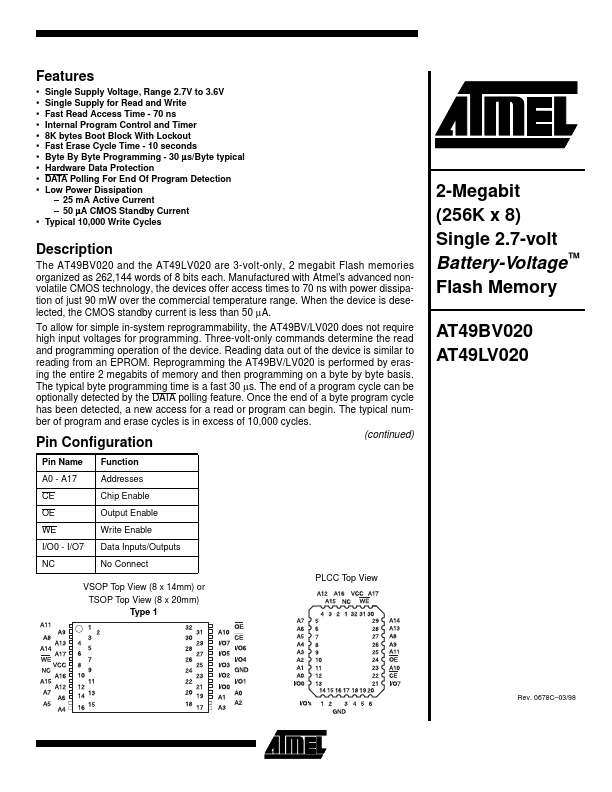
AT49BV020 - 2-Megabit (256K x 8) Single 2.7-volt Battery-Voltage Flash Memory

Description

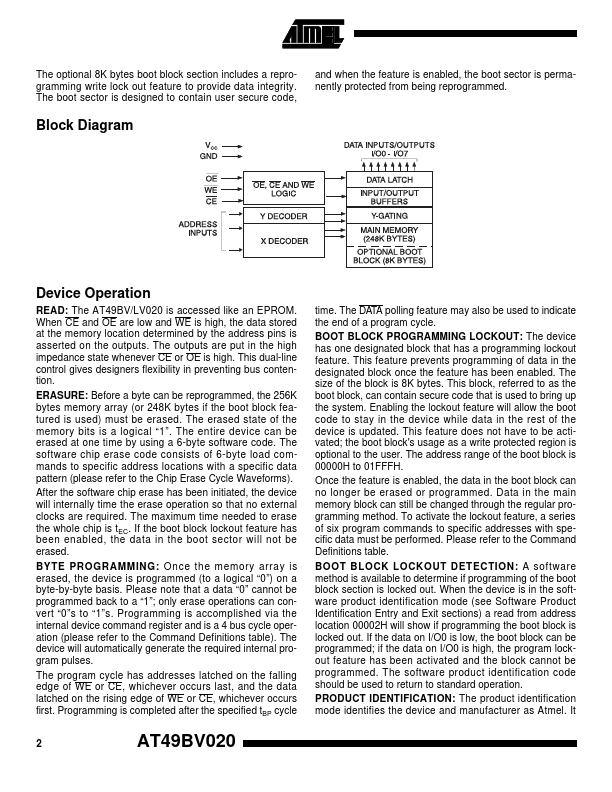
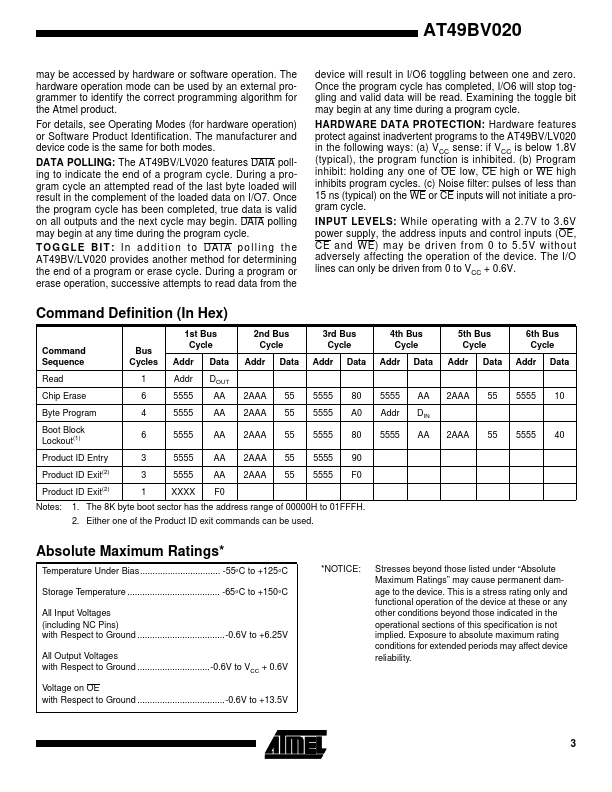
The AT49BV020 and the AT49LV020 are 3-volt-only, 2 megabit Flash memories organized as 262,144 words of 8 bits each.

Manufactured with Atmel's advanced nonvolatile CMOS technology, the devices offer access times to 70 ns with power dissipation of just 90 mW over the commercial temperature range.

Features

  • Single Supply Voltage, Range 2.7V to 3.6V.
  • Single Supply for Read and Write.
  • Fast Read Access Time - 70 ns.
  • Internal Program Control and Timer.
  • 8K bytes Boot Block With Lockout.
  • Fast Erase Cycle Time - 10 seconds.
  • Byte By Byte Programming - 30 µs/Byte typical.
  • Hardware Data Protection.
  • DATA Polling For End Of Program Detection.
  • Low Power Dissipation.
  • 25 mA Active Current.
  • 50 µA CMOS Stand.

📥 Download Datasheet

Datasheet Details

Part number AT49BV020
Manufacturer Atmel (Microchip)
File Size 115.25 KB
Description 2-Megabit (256K x 8) Single 2.7-volt Battery-Voltage Flash Memory
Datasheet download datasheet AT49BV020 Datasheet

Full PDF Text Transcription (Reference)

The following content is an automatically extracted verbatim text from the original manufacturer datasheet and is provided for reference purposes only.

View original datasheet text
Features • Single Supply Voltage, Range 2.7V to 3.6V • Single Supply for Read and Write • Fast Read Access Time - 70 ns • Internal Program Control and Timer • 8K bytes Boot Block With Lockout • Fast Erase Cycle Time - 10 seconds • Byte By Byte Programming - 30 µs/Byte typical • Hardware Data Protection • DATA Polling For End Of Program Detection • Low Power Dissipation – 25 mA Active Current – 50 µA CMOS Standby Current • Typical 10,000 Write Cycles Description The AT49BV020 and the AT49LV020 are 3-volt-only, 2 megabit Flash memories organized as 262,144 words of 8 bits each. Manufactured with Atmel's advanced nonvolatile CMOS technology, the devices offer access times to 70 ns with power dissipation of just 90 mW over the commercial temperature range.
Published: |