Datasheet4U Logo Datasheet4U.com

MCM63F819K - (MCM63F737K / MCM63F819K) 128K x 36 and 256K x 18 Bit Flow-Through BurstRAM Synchronous Fast Static RAM

Download the MCM63F819K datasheet PDF. This datasheet also covers the MCM63F737K variant, as both devices belong to the same (mcm63f737k / mcm63f819k) 128k x 36 and 256k x 18 bit flow-through burstram synchronous fast static ram family and are provided as variant models within a single manufacturer datasheet.

General Description

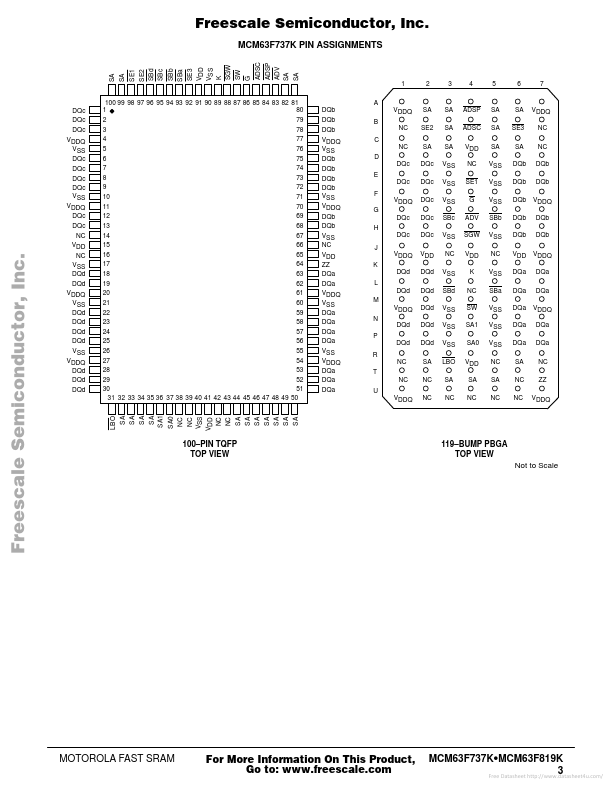
Pin Locations 85 Symbol ADSC Type Input Description Synchronous Address Status Controller: Active low, interrupts any ongoing burst and latches a new external address.

Used to initiate a READ, WRITE, or chip deselect.

Key Features

  • pt G, LBO, and ZZ. Linear Burst Order Input: This pin must remain in steady state (this signal not registered or latched). It must be tied high or low. Low.
  • linear burst counter. High.
  • interleaved burst counter. Synchronous Address Inputs: These inputs are reg.

📥 Download Datasheet

Note: The manufacturer provides a single datasheet file (MCM63F737K_Motorola.pdf) that lists specifications for multiple related part numbers.

Full PDF Text Transcription (Reference)

The following content is an automatically extracted verbatim text from the original manufacturer datasheet and is provided for reference purposes only.

View original datasheet text
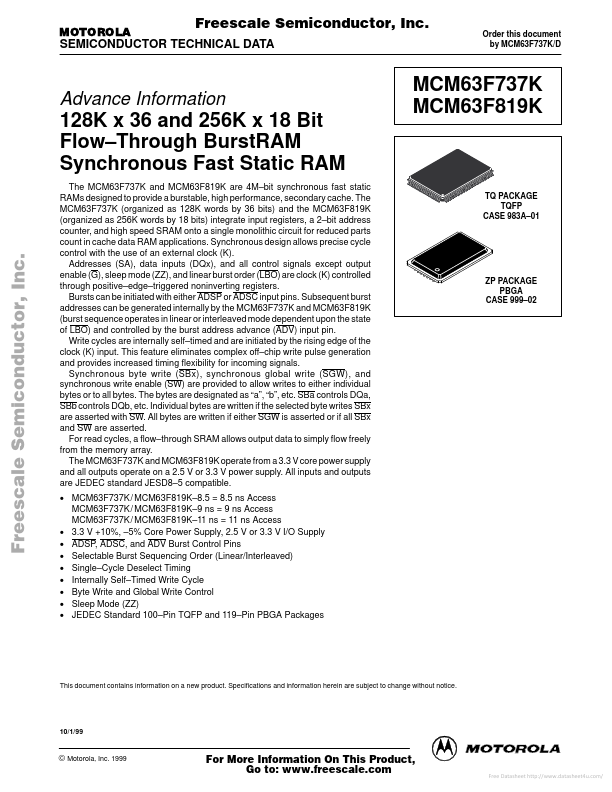
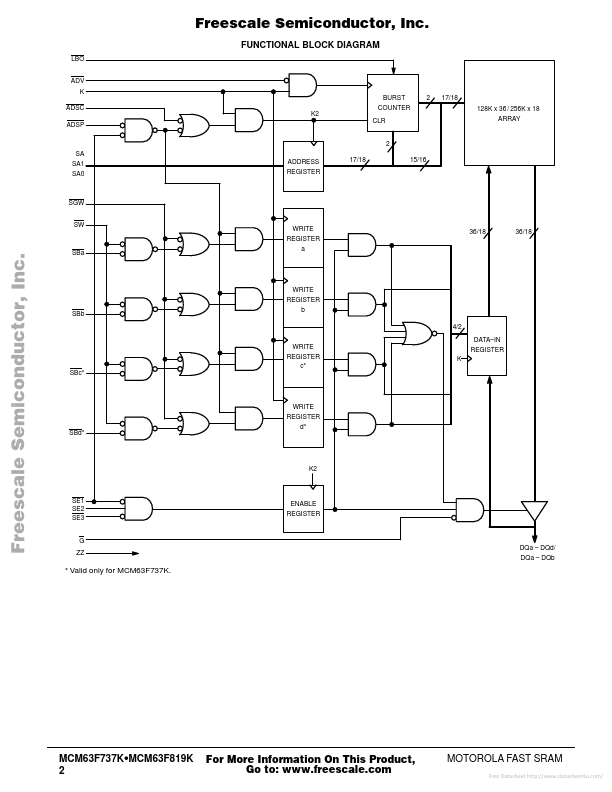
MOTOROLA Freescale Semiconductor, Inc. SEMICONDUCTOR TECHNICAL DATA Order this document by MCM63F737K/D Advance Information 128K x 36 and 256K x 18 Bit Flow–Through BurstRAM Synchronous Fast Static RAM The MCM63F737K and MCM63F819K are 4M–bit synchronous fast static RAMs designed to provide a burstable, high performance, secondary cache. The MCM63F737K (organized as 128K words by 36 bits) and the MCM63F819K (organized as 256K words by 18 bits) integrate input registers, a 2–bit address counter, and high speed SRAM onto a single monolithic circuit for reduced parts count in cache data RAM applications. Synchronous design allows precise cycle control with the use of an external clock (K).